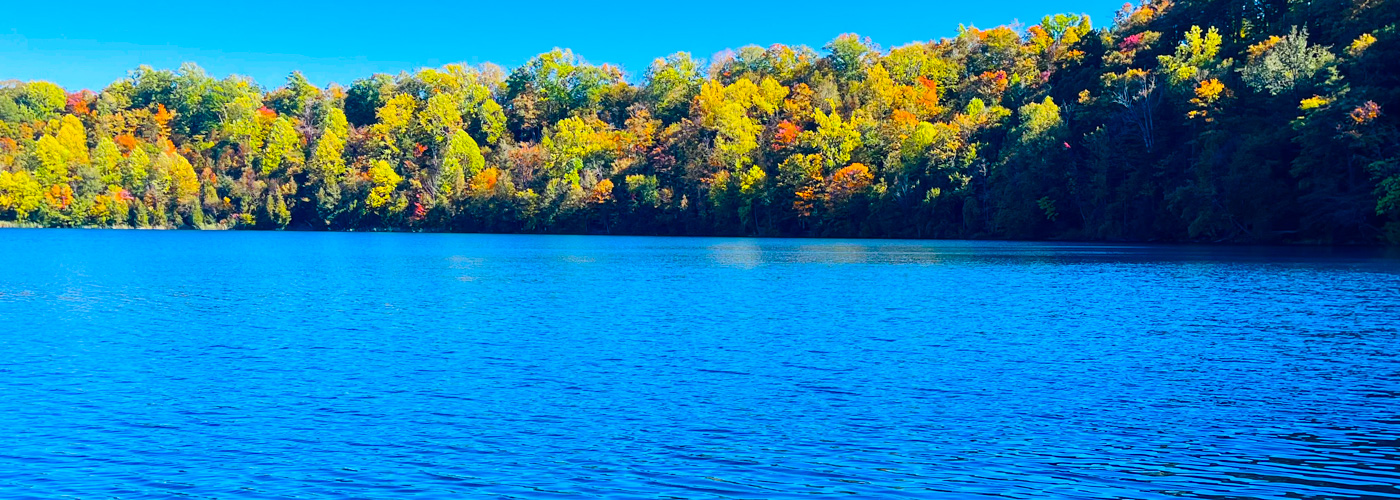


Autumn Colors at Green Lakes State Park
By Randi Lynn Quackenbush
- A five-mile hike around two scenic lakes
- Rare freshwater reef ringed by 200-year-old cedars
- A trail through rare Northeastern old-growth forest
Green Lakes State Park feels like a literal gem of a location in Central New York. Located just outside of Syracuse, the park features two glacial lakes—Green and Round Lakes—that are indeed a stunning green and look almost Caribbean in nature.
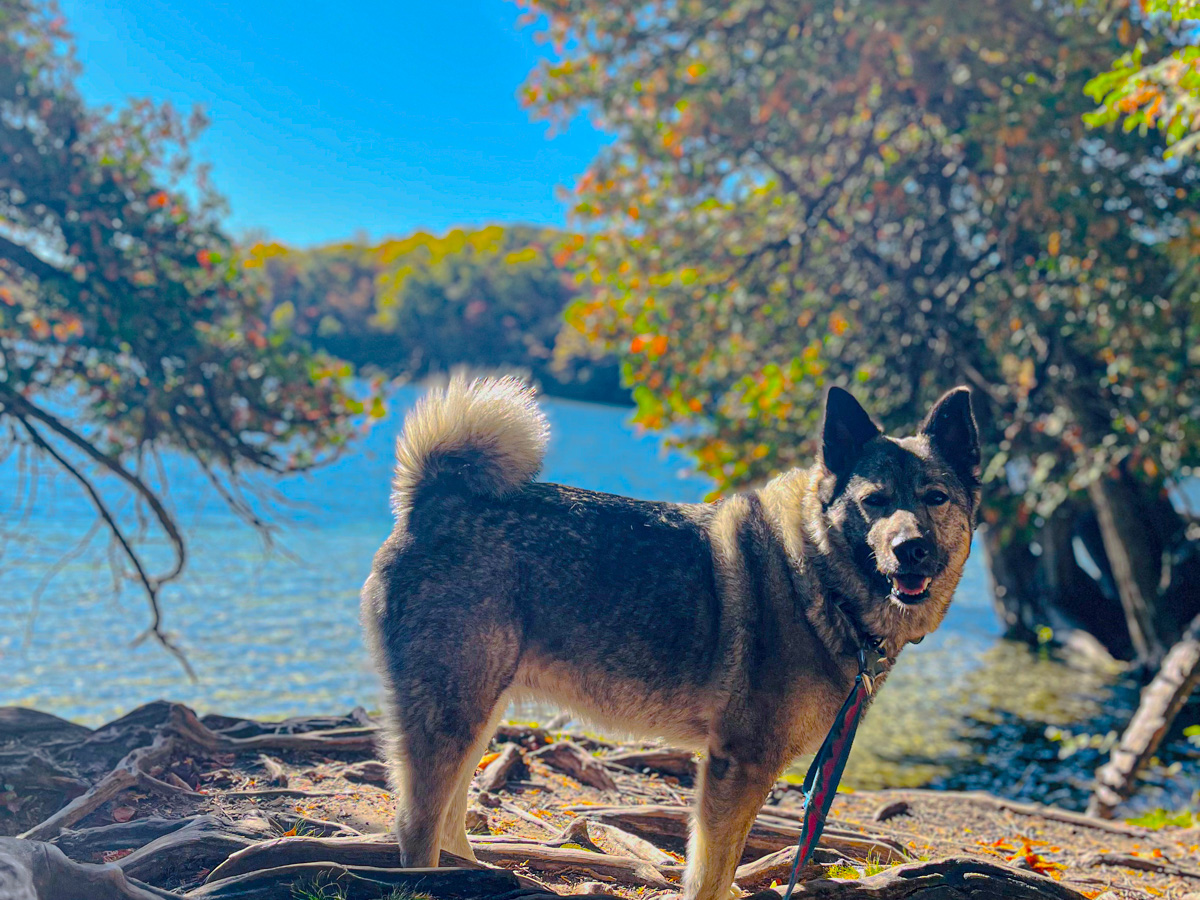
Surrounding these two natural wonders is a superb state park full of several amenities and recreation opportunities including boating, fishing, hiking, camping, swimming, and, in the wintertime, cross-country skiing. However, I wasn’t going there to boat or swim, as these services were closed for the season. I was headed here for the fall colors, and also to learn more about the natural phenomenon of these lakes. So I loaded up Luna, my Norwegian Elkhound and adventure partner, to spend a sunny October afternoon exploring this park.
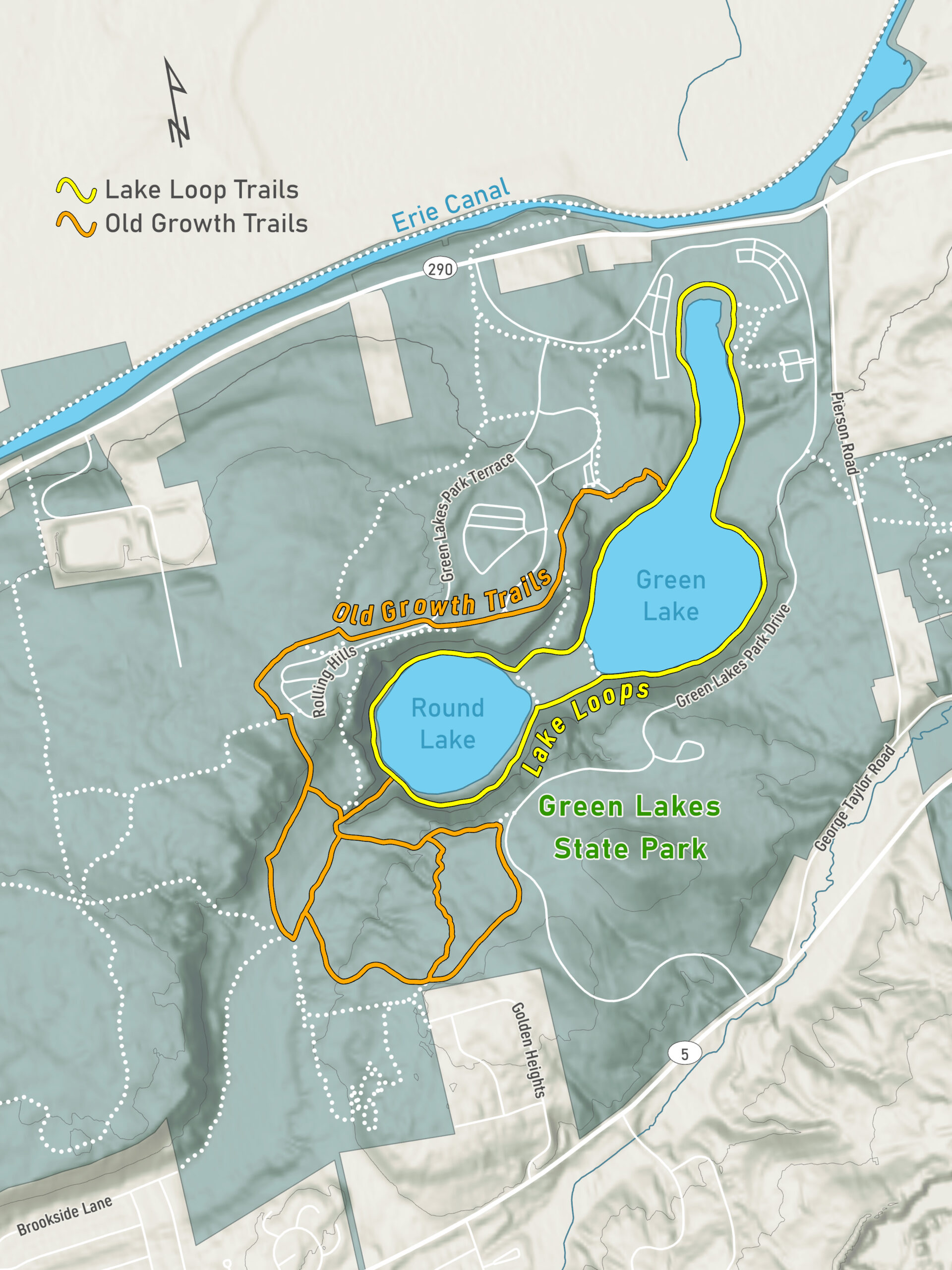
As we approached the park, we paralleled the Erie Canal before entering the northern entrance. I parked near the Environmental Education Center, which is open daily and contains information on local natural history as well as aquariums of the local fish population. After checking out this building, Luna and I began our walk around Green Lake, the larger and deeper of the two at about 195 feet deep.
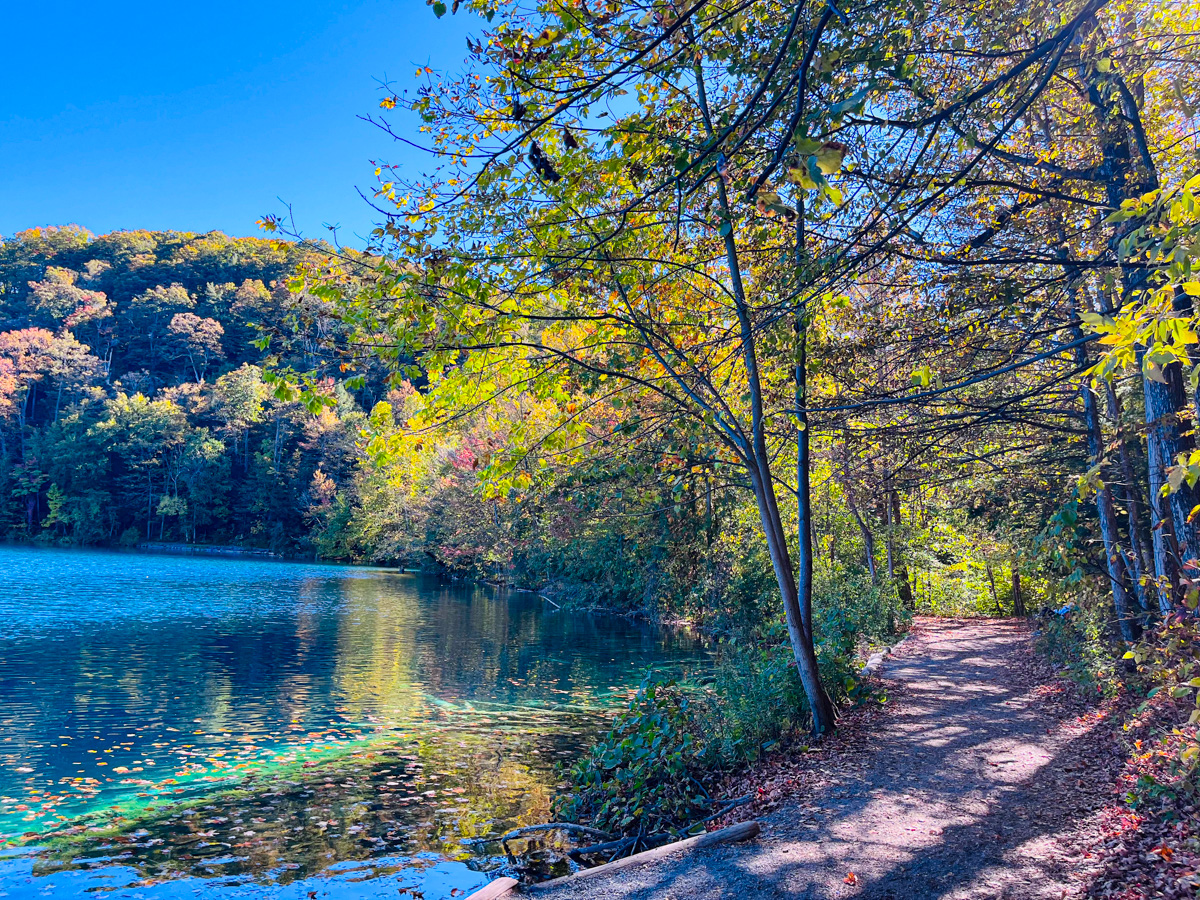
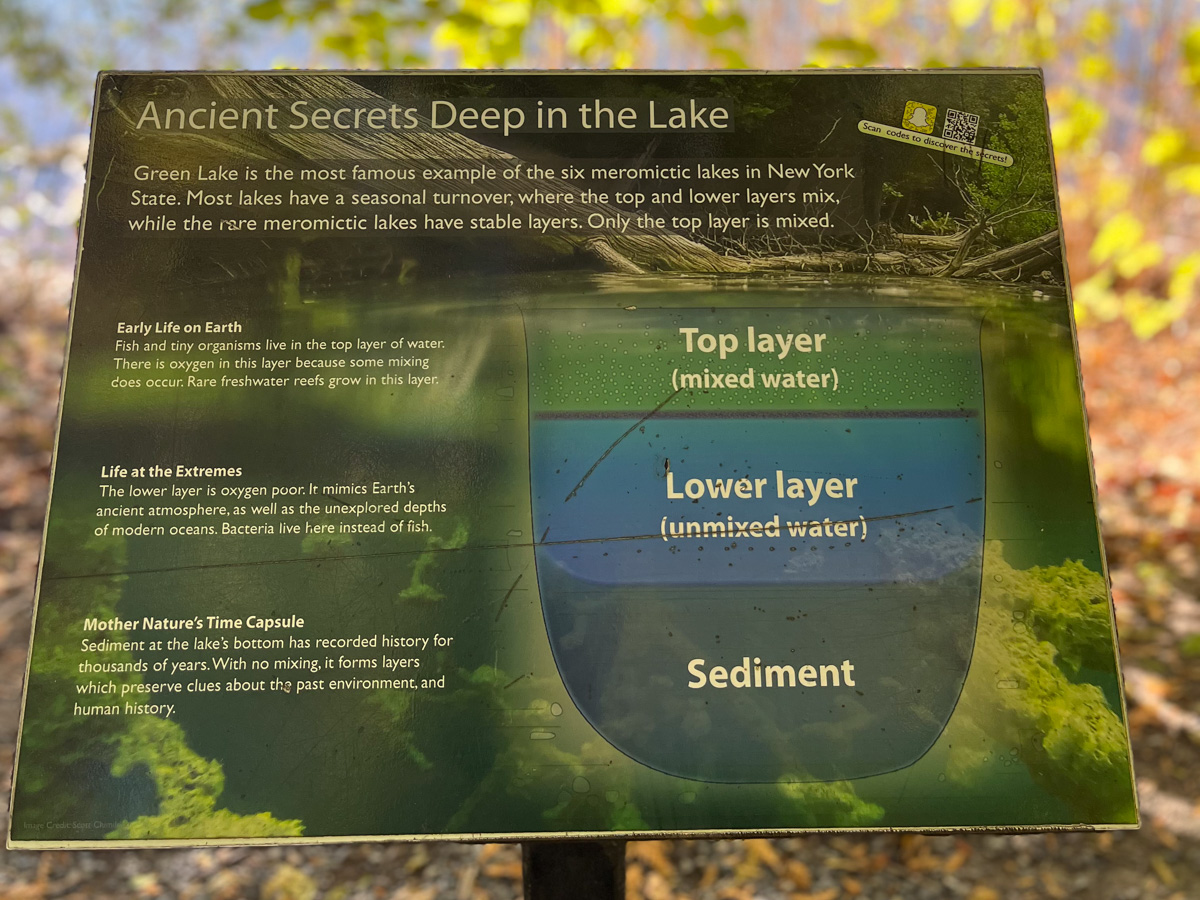
Green and Round Lakes are meromictic lakes, which means that, unlike most lakes, there is no fall and spring mixing of surface and bottom waters. This phenomenon is what gives the lakes their bluish-green color. The lakes were most likely created by plunge pools during the last Ice Age some 15,000 years ago. Such lakes can serve as a sort of time capsule into the past by preserving ancient plant and animal life.
The trails around the two lakes are flat and wide and well maintained. There were a fair number of visitors for a weekday afternoon in October, and I heard a variety of languages and felt a sense of pride in how upstate New York has places that draw people from around the world.
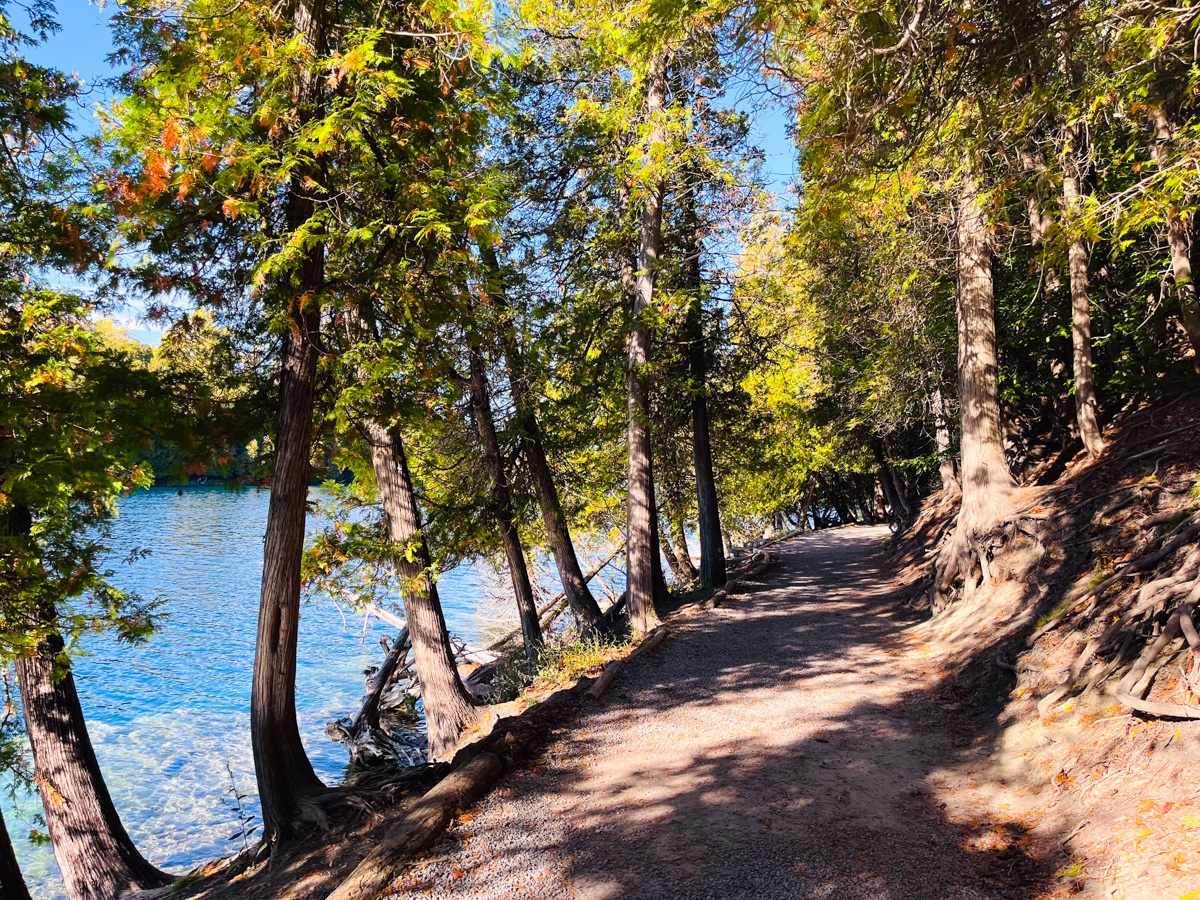
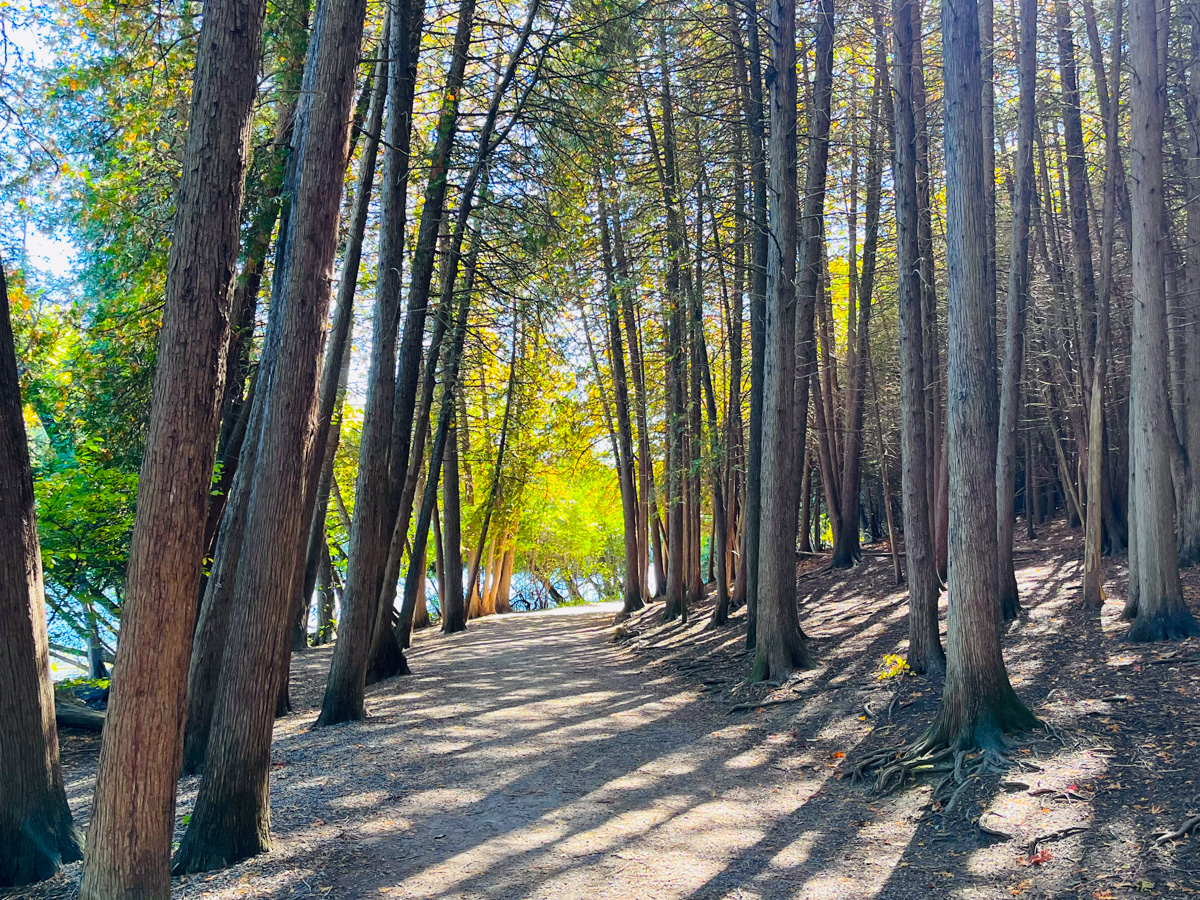
Right away, we entered a cedar grove. Thanks to a helpful sign, I learned that there are three types of trees that really stand out here: eastern hemlock, northern white cedar, and tulip trees. These trees at this time of year provided a brilliant contrast to the blue-green lakes. I personally have always loved cedar trees, especially the bark, and here they lined the shorelines, sheltered from the winds by the surrounding hills.
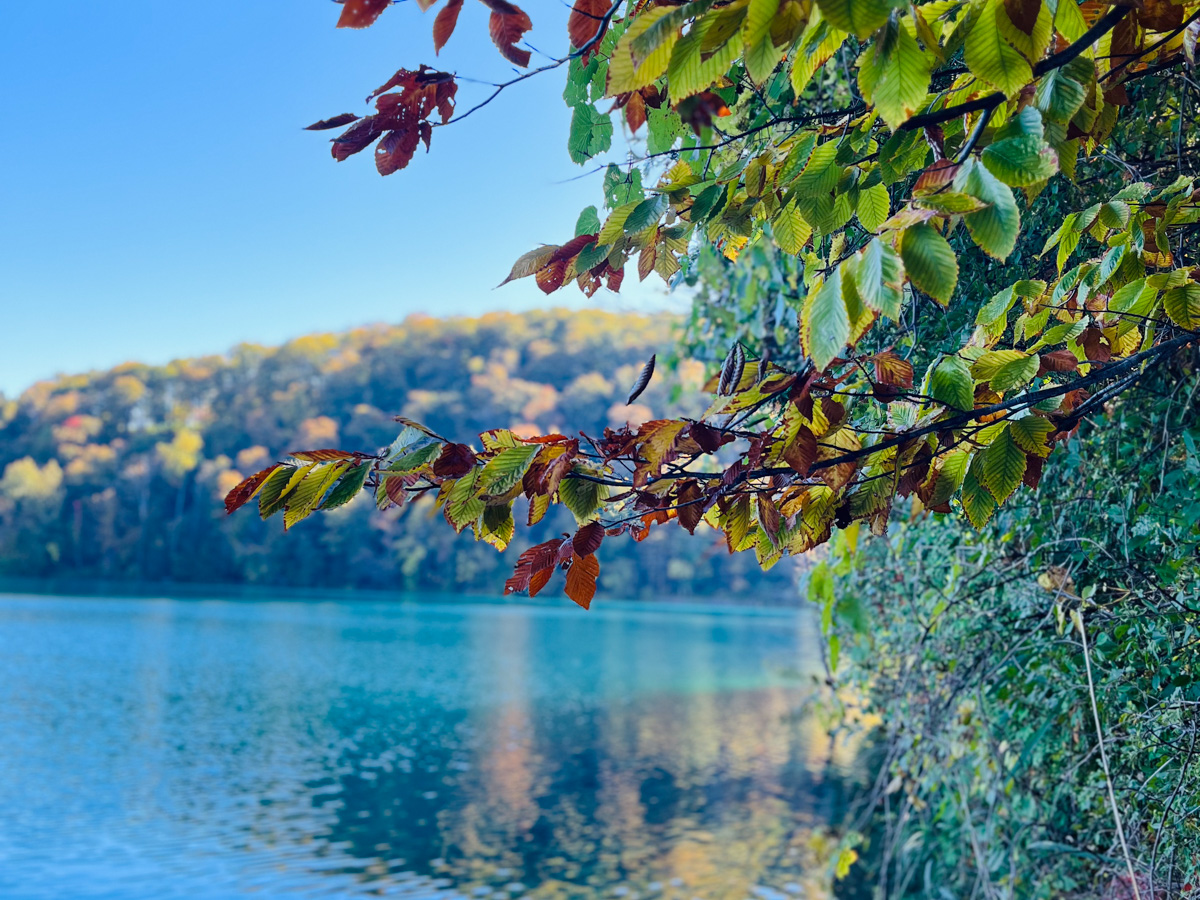
A half mile brought us to the turn to Round Lake, and it was instantly much quieter. Round Lake and the 100 acres surrounding it were designated a National Natural Landmark in 1973. Here, no fishing is allowed, unlike on Green Lake. The sunshine and blue sky contrasted with the changing leaves and the greenish-blue water. It was a one-mile walk around Round Lake in the crisp fall air, passing only a few people. Soon we were back to Green Lake.
On this side, the afternoon sun was shining more directly on us as we crunched through the leaves. Coming back around the other side of Green Lake, we approached Dead Man’s Point, which is a rare freshwater reef ringed by 200-year-old cedars.
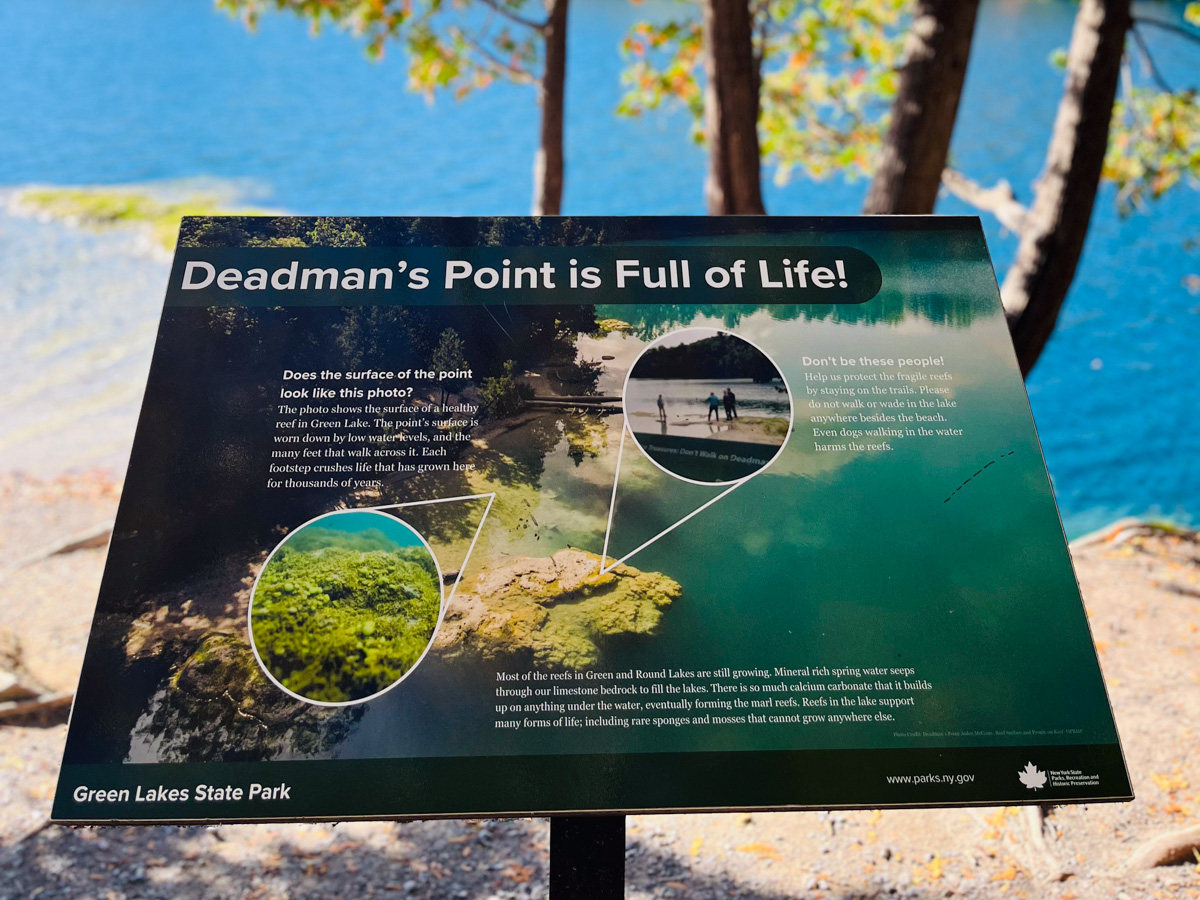
This kind of reef is created by bacteria binding with dissolved limestone and other plant-based organisms. Here, the reef juts out far into the blue waters along with trunks of long-dead cedars bleached by the sun.
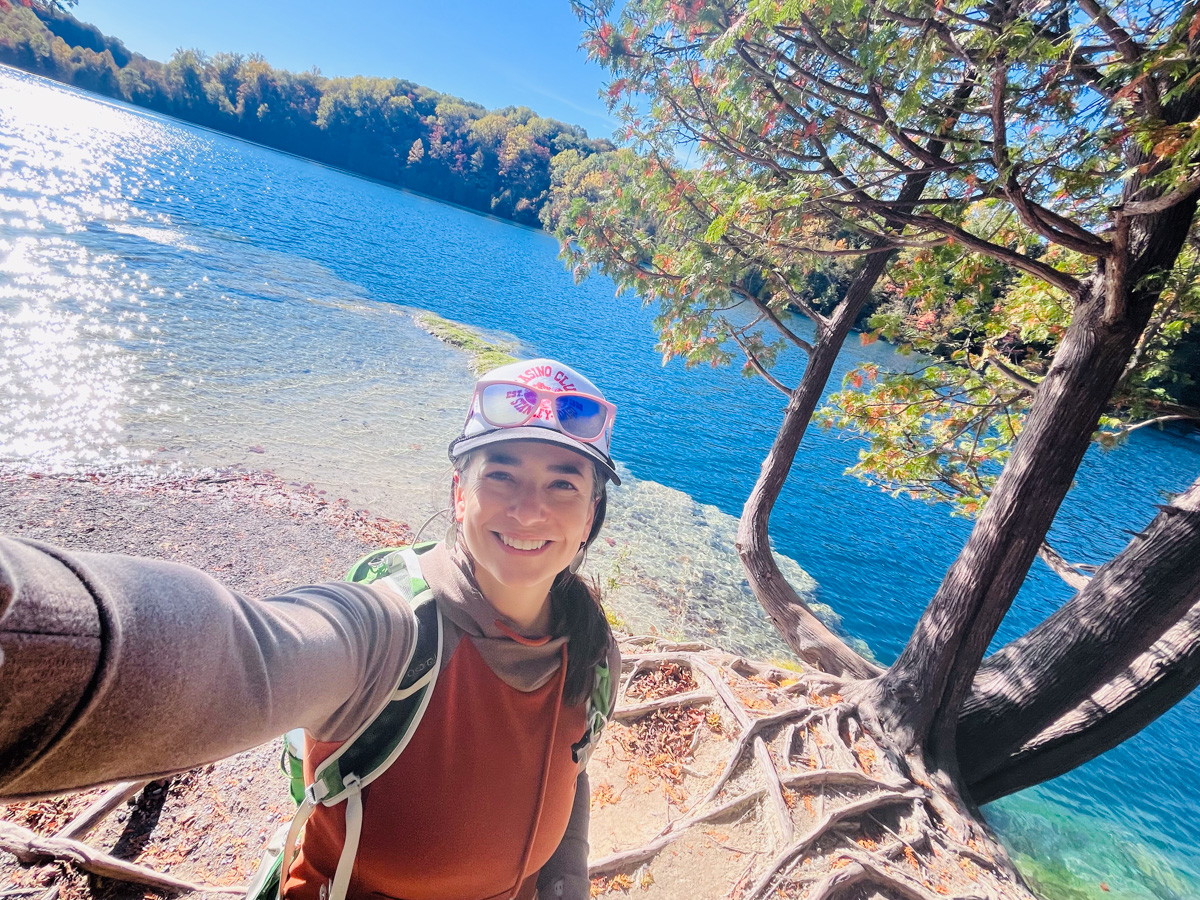
Soon we were at the beach area, closed for the season. The popular sandy beach is open from around Memorial Day through Labor Day. During that season, you can rent boats here, including clear kayaks to see the amazing colors while you paddle. Outside boats are prohibited due to the sensitive nature of these lakes, and this is strictly enforced. After finishing the three-mile lake loop, I wanted to explore some of the other trails—namely the Old Growth Trail. This passes through parts of a rare northeastern old-growth forest, which covers about 59 acres. Green Lakes State Park protects tulip trees that may be up to 300 years old and over 140 feet tall, and hemlocks that are over 400 years old.
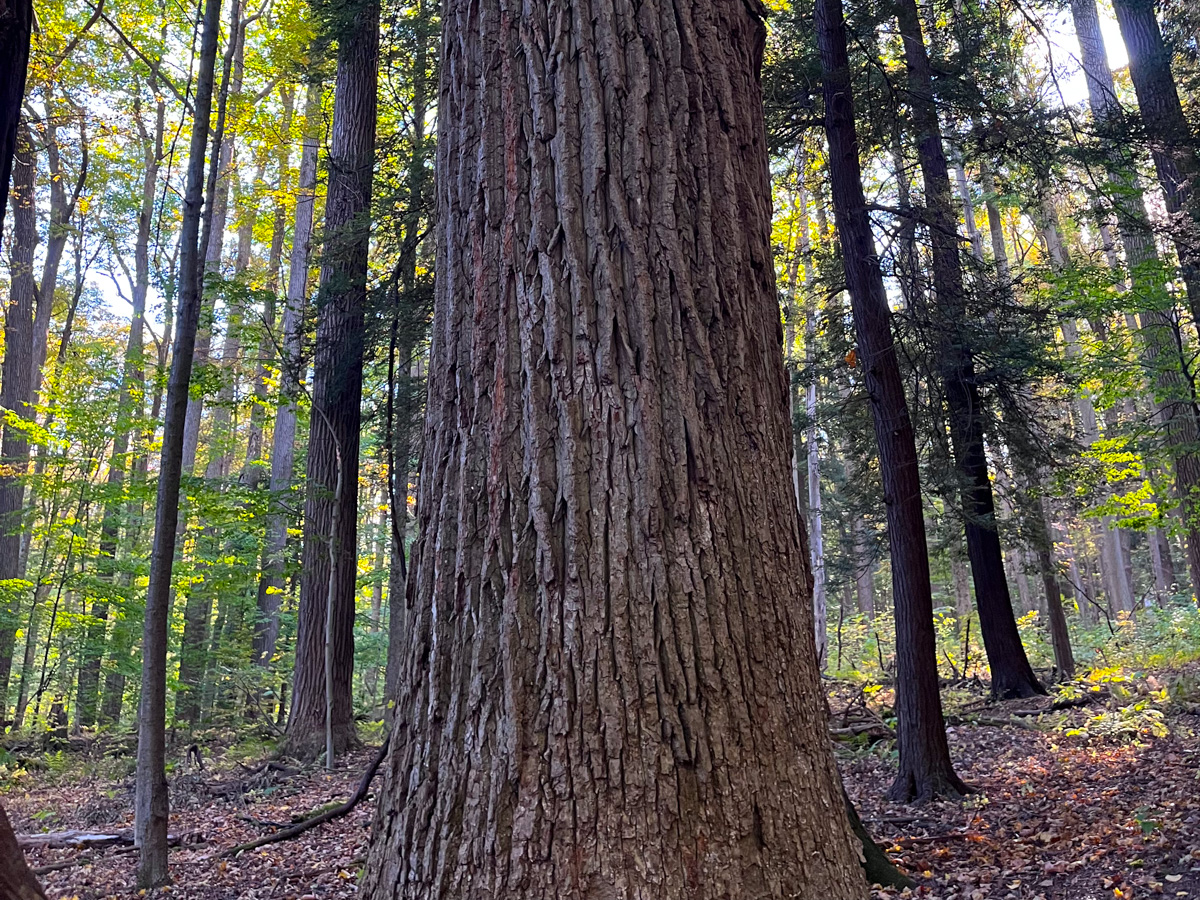
On this trail we passed near the Rolling Hills camping area, which is nestled above Round Lake. There were just a few late-season campers—this was the last week the campground was open. We then hiked through a section of the Old Growth Trail, gazing up at some of the tall giants and enjoying the solitude of this section of the park. The massive tuliptrees here are a type of poplar that is the tallest hardwood east of the Mississippi.
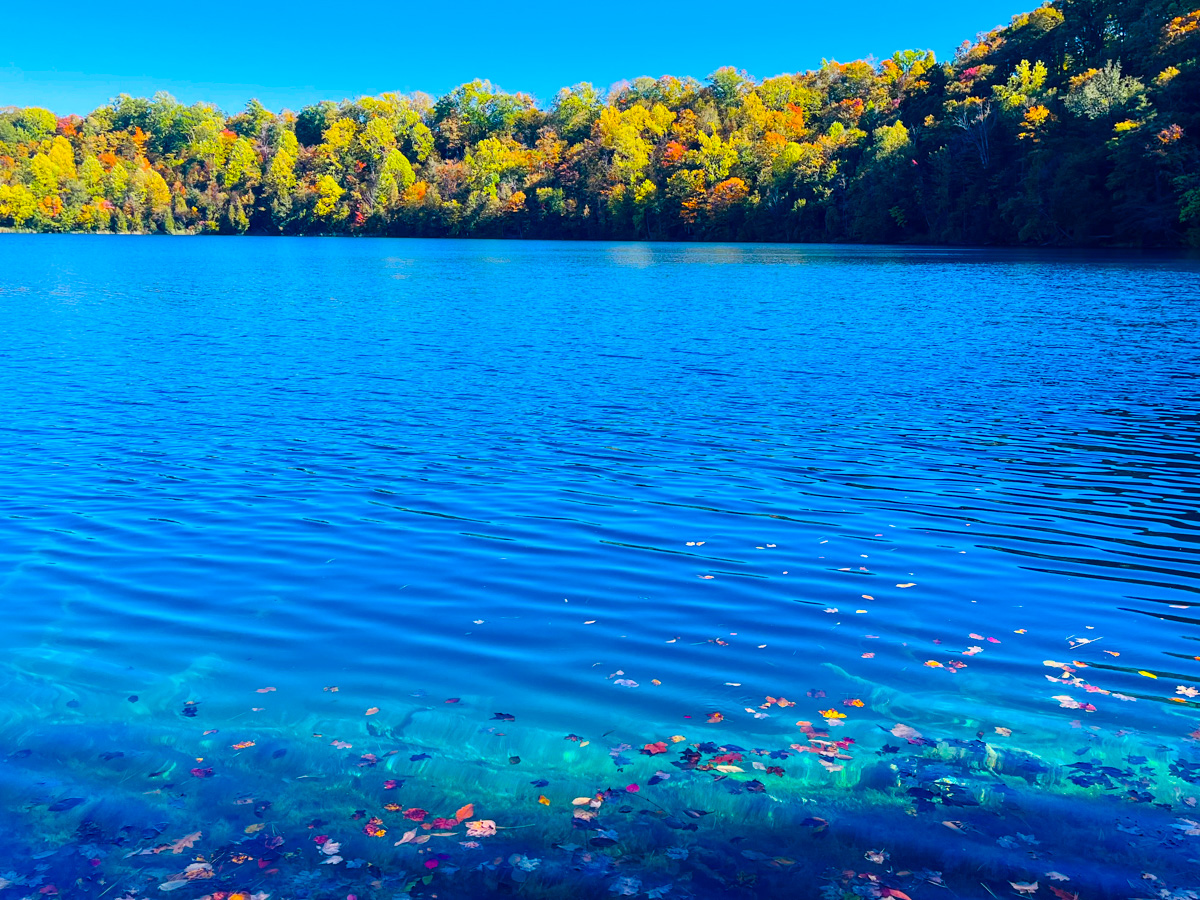
Soon the sun crested behind the hills and our time at Green Lakes State Park was winding down. While we had covered five miles of some of the most scenic trails, we had only really scratched the surface of the 25 miles of trail the park has to offer. Green Lakes State Park is open year-round, and I thought about coming back during the winter months to check out the groomed trails on my cross-country skis. I felt grateful that I didn’t need to go too far from home to find landscapes that are both scientifically extraordinary and beautiful.
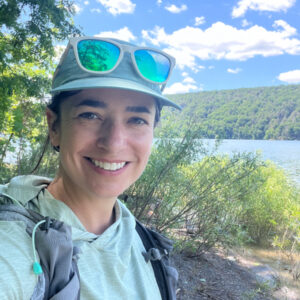
Randi Lynn Quackenbush was born and raised between Keuka and Seneca Lakes and now resides outside of Trumansburg near Cayuga Lake. She is a licensed NYS Guide and the owner of Crescent Moon Outdoors, a guiding and outdoor education business focused on getting women into the outdoors.
Learn More
Conservation
Recreation
Share This