COVID-19 Update

Photo: Nikhil Nagane

COVID-19 Update About Park and Trail Closings Around the Finger Lakes Region

Please check before visiting, and protect yourself and others so that we all may continue to enjoy nature’s benefits.


Updated April 16, 2020

Dear Finger Lakers,

Gofingerlakes.org, a project of the Finger Lakes Land Trust, was created to inspire people to get outdoors and explore the natural beauty of our region.  As your guide to the best spots for outdoor recreation across our 6,000-square-mile area, we are pleased to offer this free service – especially now when a hike in nature can be a particularly potent form of solace.

To keep you and your family safe during the COVID-19 crisis, we recommend that you check with the public agency or organization that administers any Go Finger Lakes location before you visit.  Decisions to close parks and trails may be made in the interest of public health.  Please continue to enjoy the outdoors close to home and be sure to practice social distancing guidelines defined by the CDC.
Photo: Nigel Kent

Web Sites

You can read the Finger Lakes Land Trust’s COVID-19 response.  You might also find useful or emergent information about Go Finger Lakes locations on these web sites:

State

New York State Office of Parks, Recreation, and Historic Preservation
New York State Department of Environmental Conservation

County

Cayuga-Seneca Canal Trail
Chemung River Friends
Ontario County
Onondaga County Parks
Town of Dryden
Friends of the Outlet
Cayuga County
Seneca Meadows

National

U.S. Fish & Wildlife Service
United States Department of Agriculture

Go Finger Lakes Locations

Here is the complete list of Go Finger Lakes locations which include a direct link to the administrator for authoritative information.

State Forests, Parks, and More

Bear Swamp State Forest
Birdseye Hollow State Forest
Black Diamond Trail
Buttermilk Falls State Park
Cascadilla Gorge Trail
Catharine Valley Trail
Cayuga-Seneca Canal Trail
Chemung River
Clark Reservation State Park
Conesus Inlet Wildlife Area
Connecticut Hill Wildlife Area
Danby State Forest
Dryden Rail Trail
Erwin Wildlife Area
Fillmore Glen State Park
Finger Lakes National Forest
Gannett Hill Park
Green Lakes State Park
Grimes Glen Park
Hammond Hill State Forest
Harriet Hollister Spencer Recreation Area
Hemlock-Canadice State Forest
High Tor Wildlife Area
Highland Forest
Howland Island
Keuka Outlet Trail
Labrador Hollow Unique Area
Montezuma National Wildlife Refuge
Morgan Hill State Forest
Oakley Corners State Forest
Owasco Flats
Pratt’s Falls Park
Robert Treman State Park
Sampson State Park
Seneca Meadows Wetland Preserve
Shindagin Hollow State Forest
Sugar Hill State Forest
Taughannock Falls State Park
Texas Hollow State Forest
Watkins Glen State Park

Nature Centers

Baltimore Woods Nature Center
Cayuga Nature Center
Cornell Botanic Gardens
Cornell Lab of Ornithology
Cumming Nature Center
Lime Hollow Nature Center
Montezuma Audubon Center
Tanglewood Nature Center

Finger Lakes Land Trust Preserves

Bahar Preserve & Carpenter Falls
Bock-Harvey Forest Preserve
Ellis Hollow Nature Preserve
Hinchcliff Family Preserve
Lick Brook Gorge
Lindsay-Parsons Biodiversity Preserve
Roy H. Park Preserve
Staghorn Cliffs
Steege Hill Nature Preserve
Wesley Hill Nature Preserve

From natural history to a natural future… help us save land forever.

Join the Land Trust

Dog-Friendly FLX Hikes

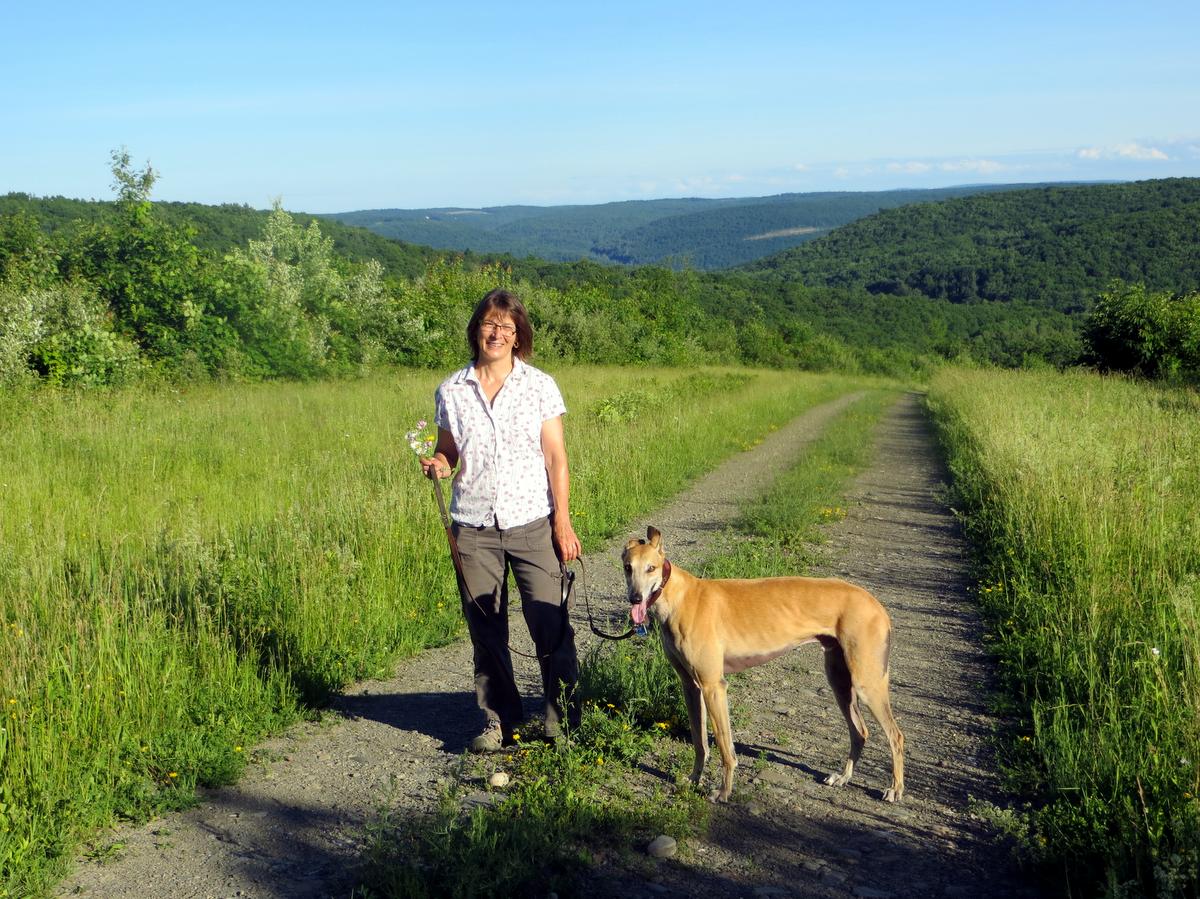
Photo: Joel Cisne

Dog-Friendly Hikes in the Finger Lakes Region

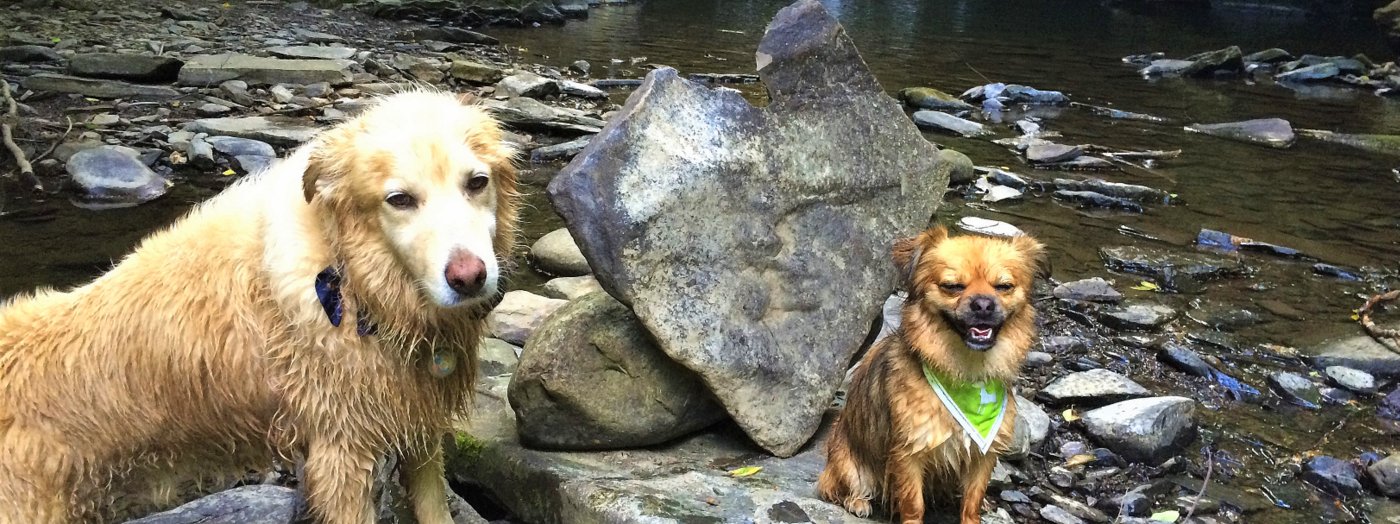
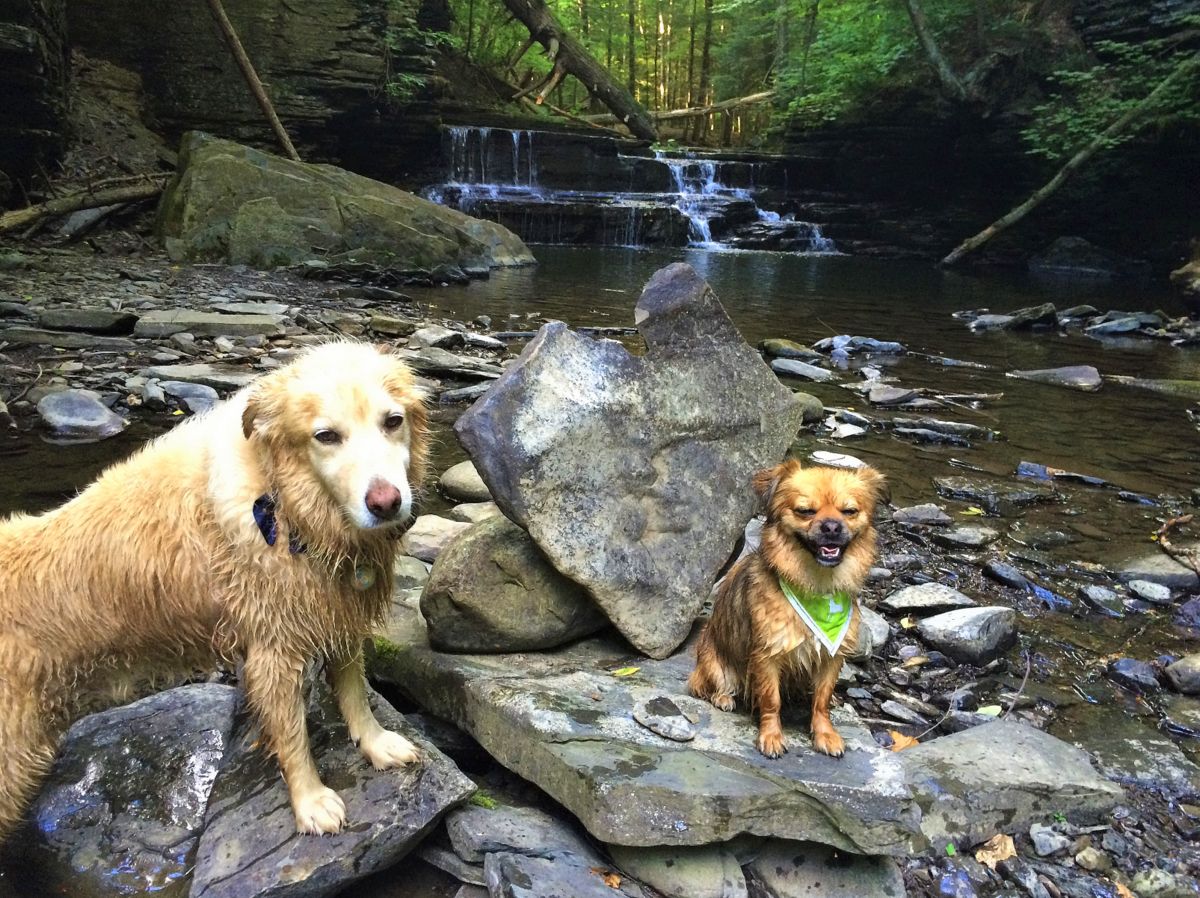
Dogs make great hiking companions and can bring tremendous joy to your outdoor adventures, but not all trails are dog-friendly. Fortunately, the Finger Lakes region offers plenty of places to get outside with your canine friends. Here are a few of our favorites, from locations with firm leash policies to places where your furry friends have a bit more freedom. Whether on or off-leash, please be sure your dog is under your control at all times.

Photo: Noel Bastien

Wesley Hill Nature Preserve

The Finger Lakes Land Trust’s Wesley Hill Preserve has a 5.6-mile trail system which winds past several gullies, diverse stands of mature forest, and a pond. Perfect for exploring, the preserve is home to the immense Briggs Gully and features sweeping views of the hills surrounding Honeoye Lake’s southern end. Dogs must be under their owner’s control at all times.

Photo: Tim Starmer

Morgan Hill State Forest

Morgan Hill is a popular spot for Syracuse and Cortland-area hikers looking for some solitude. Dogs are welcome off-leash to explore over 22 miles of marked foot trails and public forest access roads. The trails at Morgan Hill cross seasonal streams, pass through a mixture of deciduous and conifer forests, and extend to the North Country Trail—a 4,600-mile trail that traverses seven states and connects North Dakota to New York.

Photo: Monika Wood

Erwin Wildlife Management Area

Five miles west of Corning, the Erwin Wildlife Management Area features over 2,490 acres and more than ten miles of trails. Dogs are free to roam deep gullies with hemlock-shaded streams, deciduous forests, and several small ponds. Note that New York State’s wildlife management areas require dogs to be on a leash and under their owner’s control.

Photo: Tim Starmer

Sampson State Park

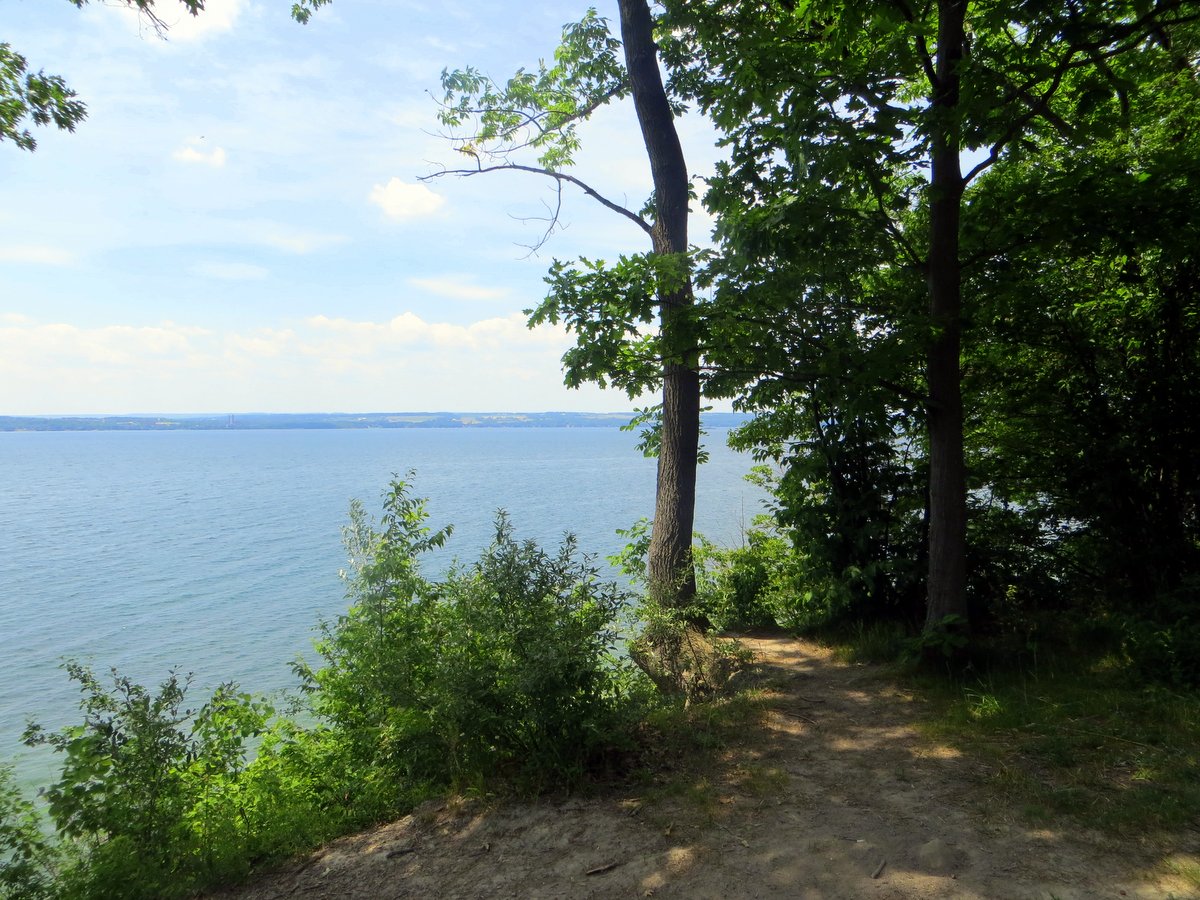
Full of military history from World War II and the Korean War, what really shines at Sampson State Park for outdoor enthusiasts is the three and half mile long Lake Trail, much of which follows the shore of Seneca Lake. Here, the access road between the village of Willard and the state park has been designated as a trail and follows within feet of the extraordinarily deep lake. Dogs must be kept on a leash at all times.

Photo: Steve Knapp

Keuka Outlet Trail

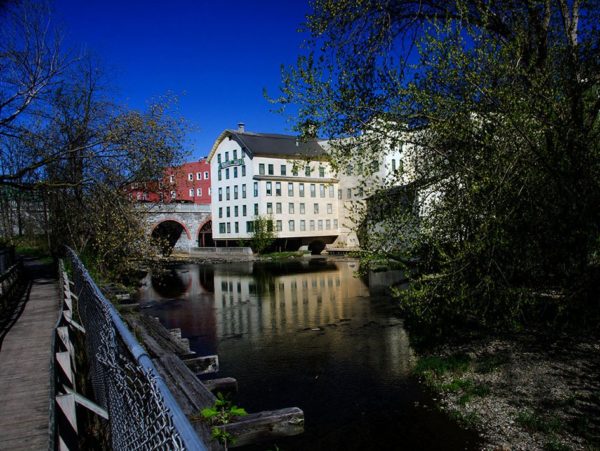
The Keuka Lake Outlet Trail follows a generally downhill course from the outlet of Keuka Lake in Penn Yan to the inlet along Seneca Lake in Dresden.  Along sections of the trail are the remains of old mill buildings and locks, lush woodlands, and two impressive waterfalls.  A winding stream accompanies hikers, runners, bikers and even equestrians along the 6.8-mile route. Dogs should be kept on a leash and under their owner’s control at all times.

Photo: Tom Reimers

Danby State Forest

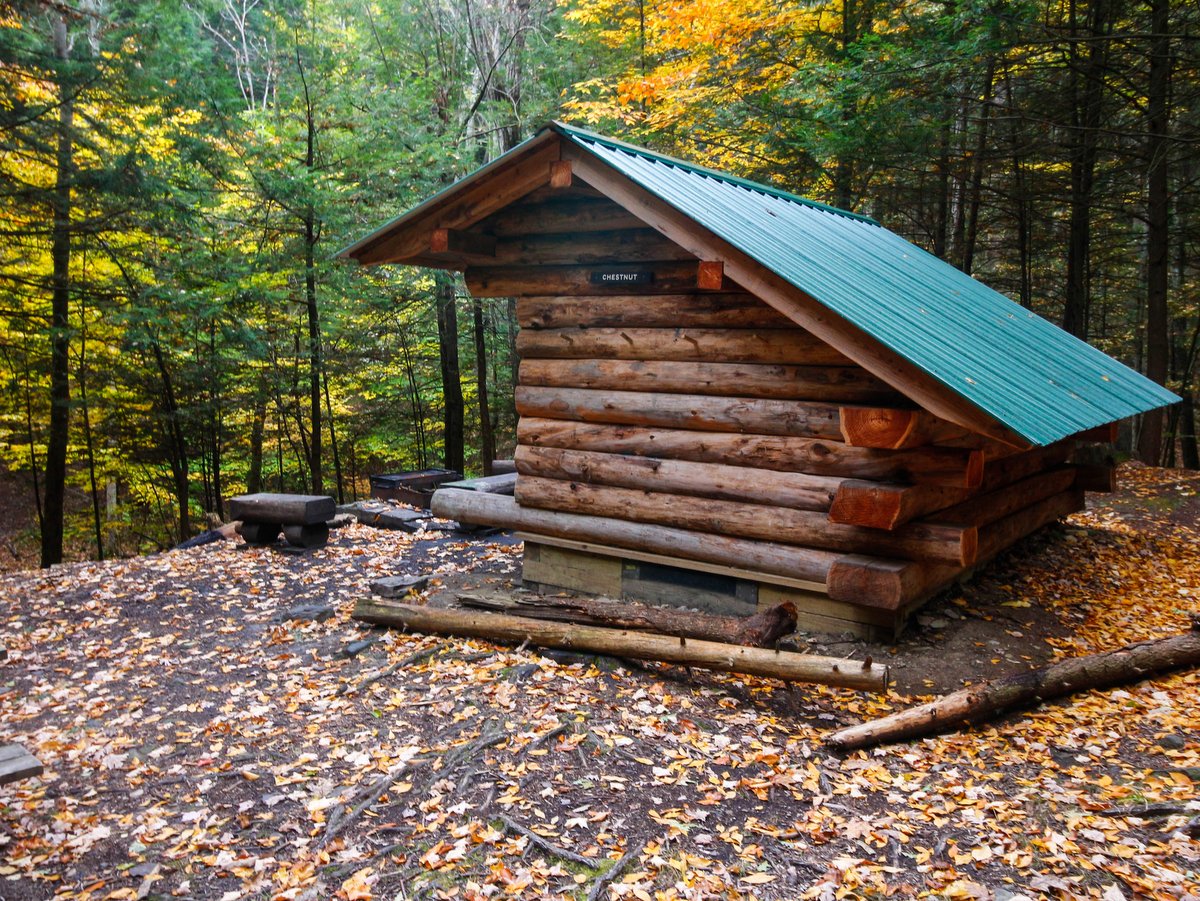
A favorite spot for Ithaca-area hikers, Danby State Forest has 7,337 acres and over 19 miles of trails including two lean-tos and a section of the Finger Lakes Trail. The forest’s popular 8-mile Abbott Loop features a stunning lookout at Thatcher’s Pinnacles, where you’ll find sweeping views of the Cayuga Inlet Valley and the Finger Lakes Land Trust’s Lindsay-Parsons Biodiversity Preserve.

Photo: Joel Cisne

A reminder to recreation enthusiasts that many parks, forests, and nature preserves allow hunting and trapping in designated periods. Each location profile on Go Finger Lakes includes a link to the managing organization – whether it be the Finger Lakes Land Trust, a New York State agency, or a nature center – and visitors should consult that agency for hunting information before each outing. See our hunting safety guidelines.

When visiting state forests, please note that the New York State Department of Environmental Conservation requires dogs to be leashed when encountering another hiking group, especially one with dogs of their own.  Dogs should be under the owner’s complete control at all times.

Other places to explore…

Cayuga-Seneca Canal Trail

Bear Swamp State Forest

See the map for more locations!

Want to know more about animals and plants of the Finger Lakes?

Take a closer look!

Top FLX Snowshoe Destinations!

Photo: Chris Ray

Top Snowshoe Destinations in the Finger Lakes Region

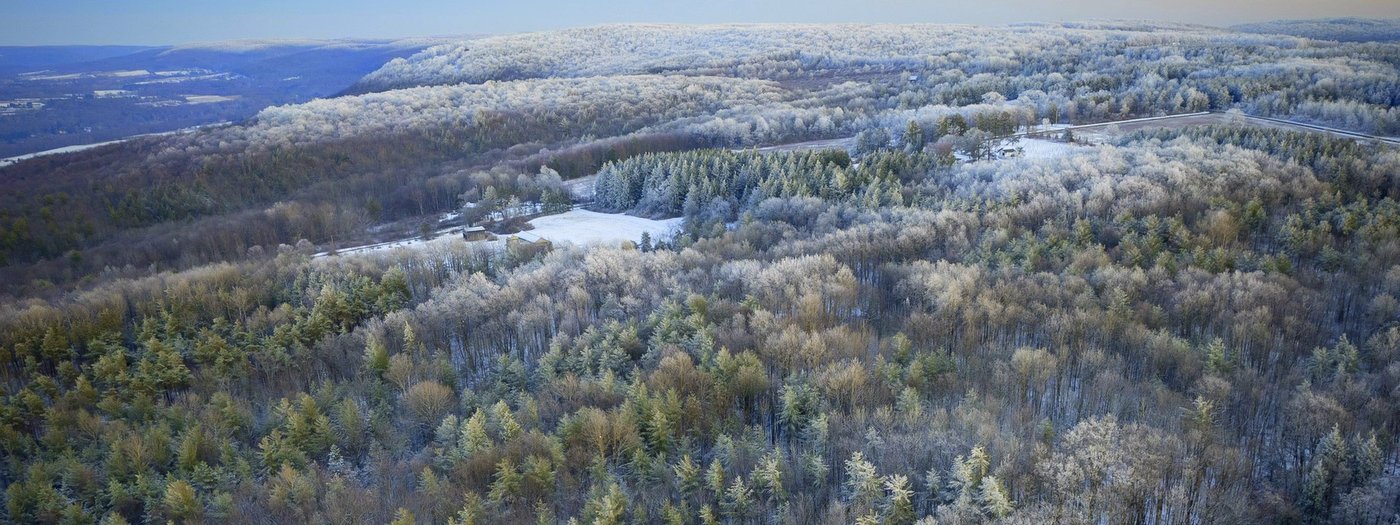
Don’t put away your snowshoes yet! There’s always snow in the higher elevations of the Finger Lakes region! Now’s your chance to get outside and explore this ephemeral winter wonderland before it’s gone. Regardless of your skill level, there is no shortage of places to go. Here are a few of our top snowshoe destinations chosen by the staff at the Finger Lakes Land Trust.

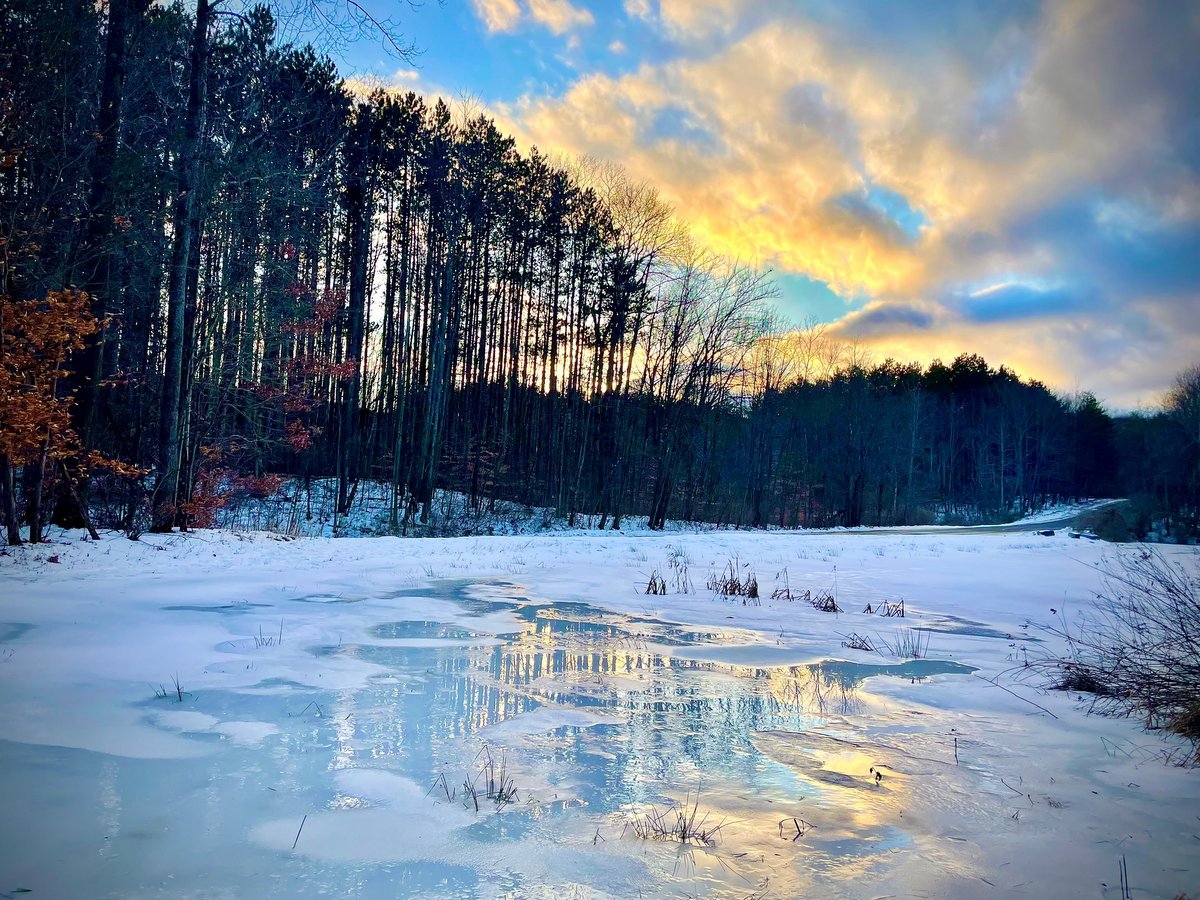
A frozen pond at sunset with bare trees in the background
Photo: Lindsay France Simanis

Connecticut Hill Wildlife Management Area

In a region dominated by out-and-back hikes, the Connecticut Hill Wildlife Management Area boasts not one but two separate loop hikes: the Van Lone Loop and the Bob Cameron Loop. The 5.7 mile-long Van Lone Loop shares a particularly picturesque section of the Finger Lakes Trail which follows Cayuta Creek along a mostly level route free of obstructions. The 2.6 mile-long Bob Cameron Loop lies within a deep, mostly deciduous forest with the trail crossing several seasonal streams. There are also numerous forest roads that provide an extensive trail network.

Photo: Karl Hanafin

Cumming Nature Center

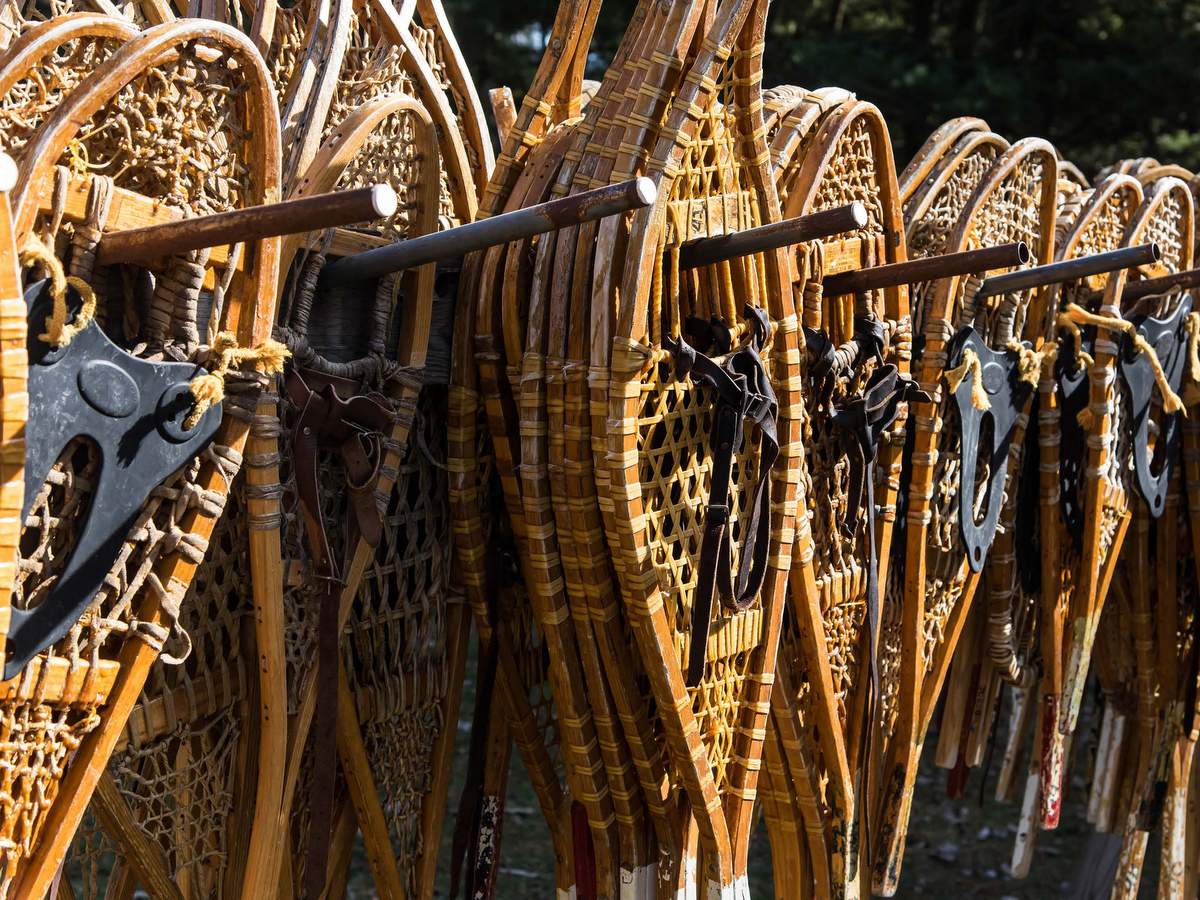
Don’t own a pair of snowshoes? Not a problem! Cumming Nature Center in Naples rents them for $5 and has a 3-mile loop just for snowshoeing. The trails here are perfect for beginners or those looking for a leisurely pace, and are patrolled by the Genesee Valley Nordic Ski Patrol. Acting as the Rochester Museum & Science Center’s “living museum,” the center is perfect for family-friendly fun.

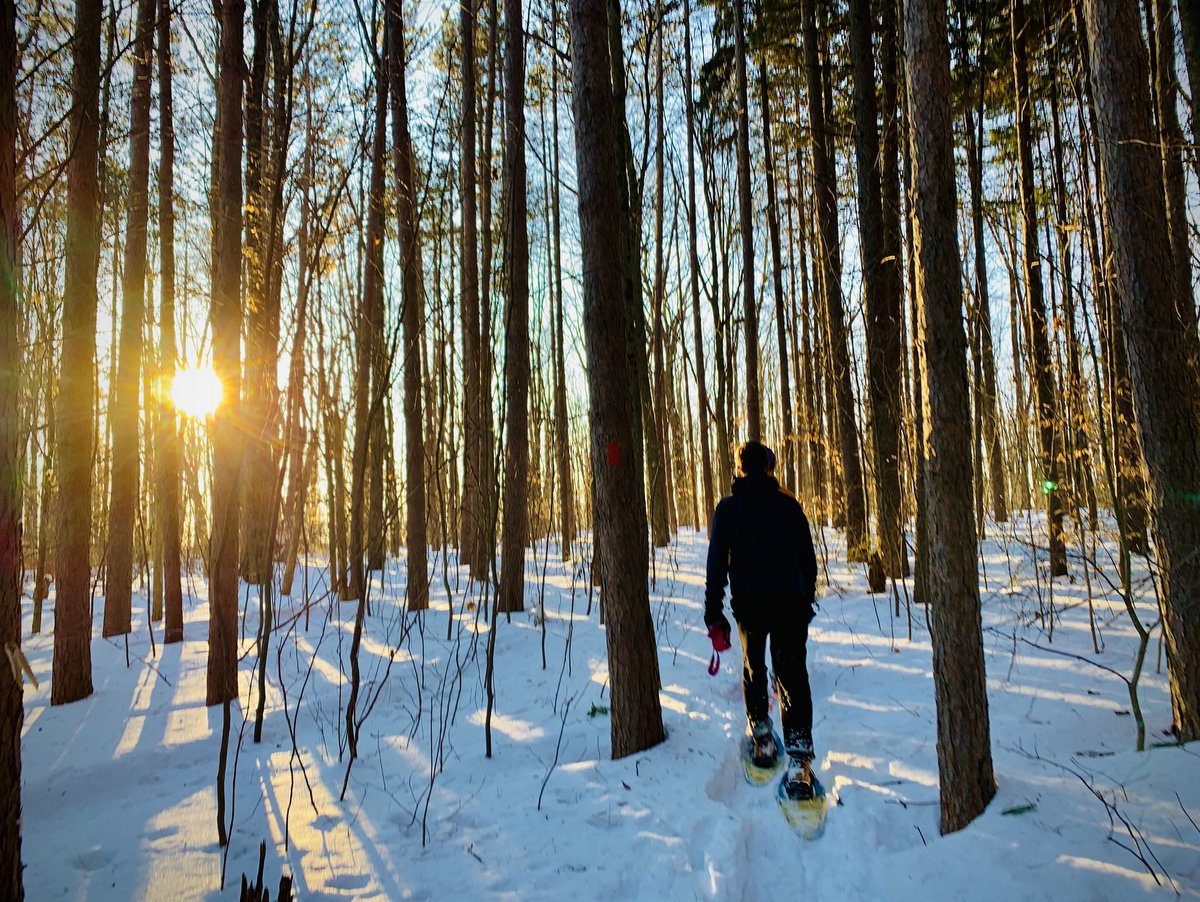
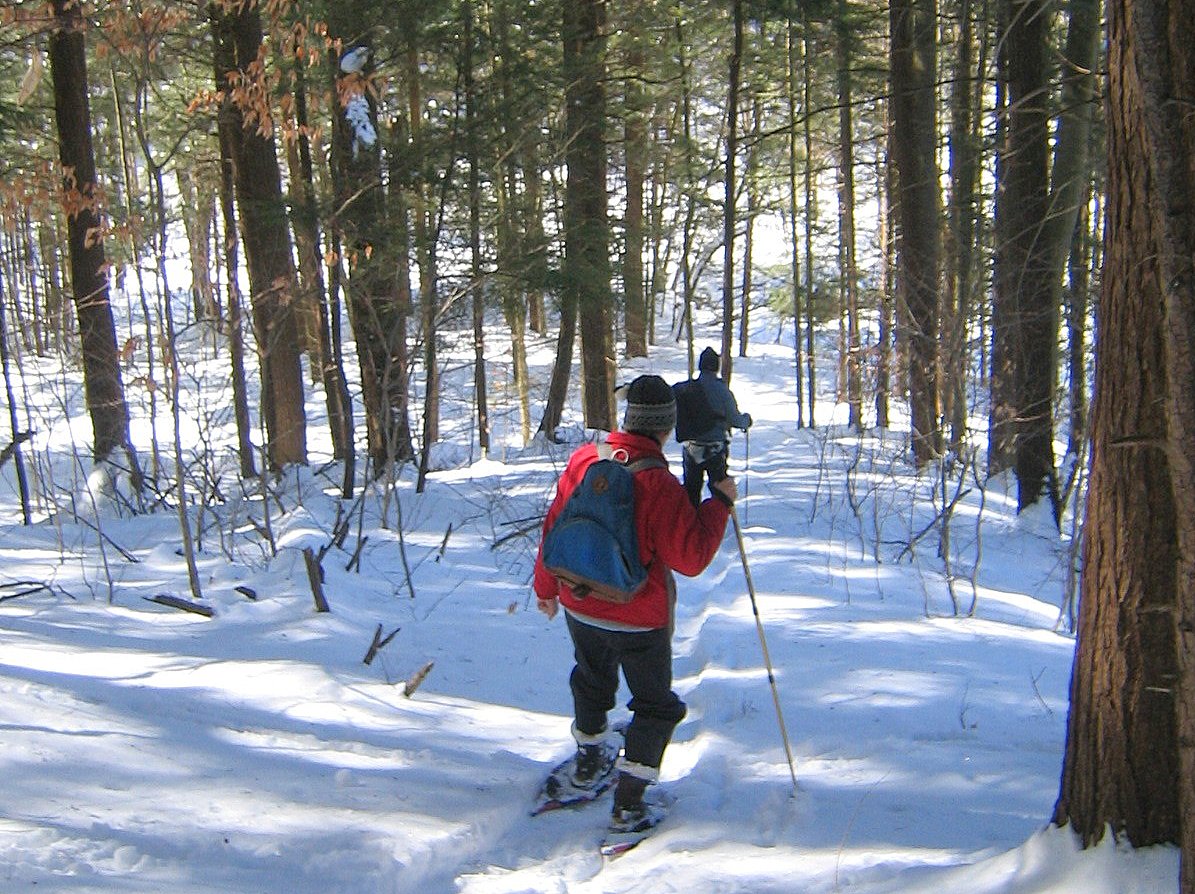
A person snowshoeing in the woods at sunset
Photo: Lindsay France Simanis

Danby State Forest

The roughly 8-mile Abbott Loop in Danby State Forest weaves primarily through wooded glens with slow creeks and hilltop oak-hickory forests. Of particular interest along the loop is a spur trail leading to a stunning lookout at Thatcher’s Pinnacles, found along the steep western edge of the forest. From the pinnacle, you’ll find sweeping views of the Cayuga Inlet Valley and the Lindsay-Parsons Biodiversity Preserve of the Finger Lakes Land Trust.

Photo: Matt Champlin

Highland Forest

Long trails are in short supply in the Finger Lakes and Central New York.  Loop trails as well. Fortunately, Highland Forest has plenty of both.  The extensive network of trails—over twenty miles of hiking/snowshoeing trails—intersects numerous wooded streams and rolling terrain through a variety of deciduous and coniferous forests. Furthermore, snowshoes are available to rent at the lodge.

Photo: Chris Ray

Green Lakes State Park

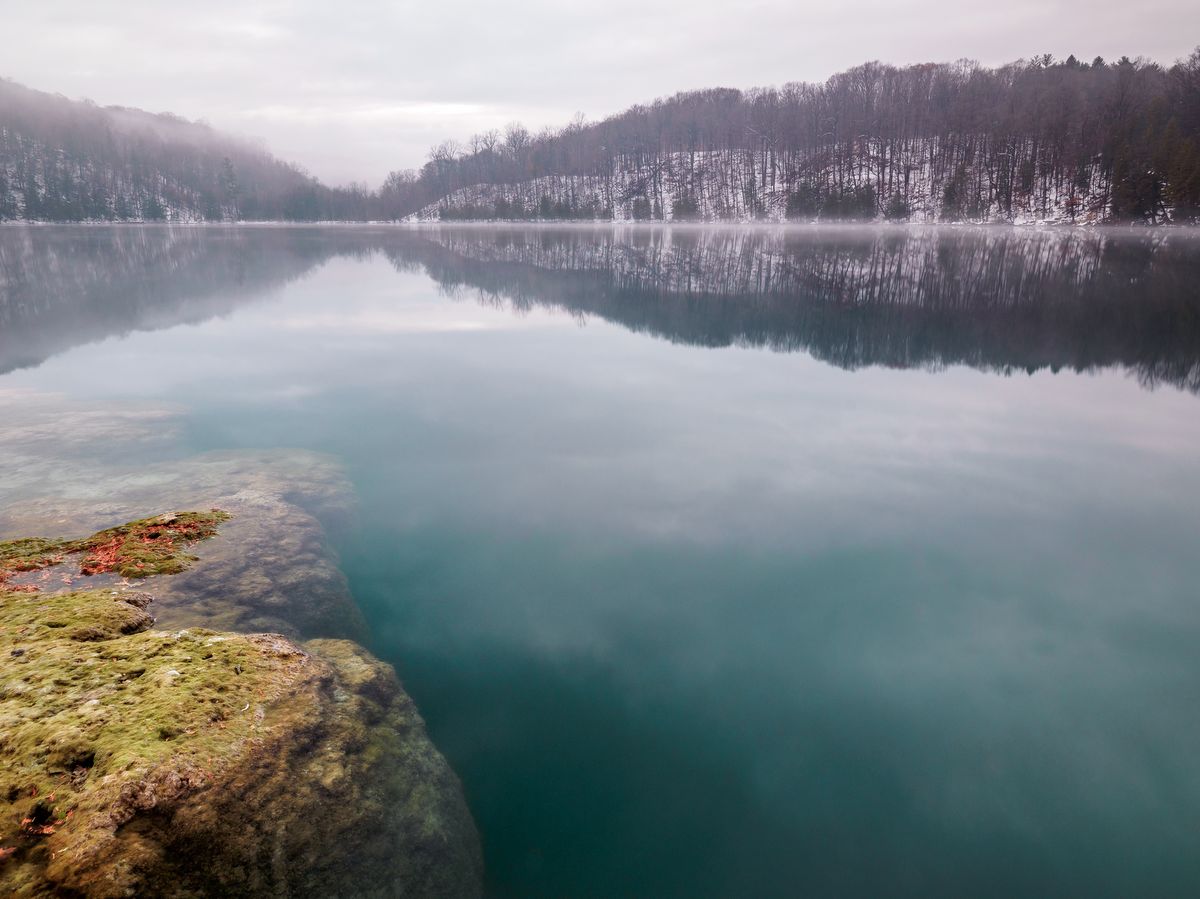
While the trails at many state parks are often closed in winter for safety reasons, Green Lakes is an exception. The park features an 18-hole golf course designed by Robert Trent Jones, where visitors can snowshoe and enjoy wide-open views. For a more challenging experience, a 13-mile trail system on the western edge of Round Lake weaves through open fields and old growth forests, a rare circumstance in the northeast.

Photo: Danielle Kisloski

Roy H. Park Preserve

Just a short drive from Ithaca, this 241-acre preserve, which features portions of an extensive forest, rolling meadows, and wetlands, is an important connector in a larger array of some 8,000 acres of protected lands. From the north entrance, cross the boardwalk and snowshoe your way into more than 20 miles of multi-use trails at Hammond Hill State Forest. An easy meandering one-mile trail that begins from the south entrance of the preserve leads you through a meadow that encircles a beautiful evergreen plantation.

Photo: Betsy Darlington

Oakley Corners State Forest

Located in the Southern Tier just north of Owego, Oakley Corners features a 13-mile multi-use trail system. All trails are color-coded and have a skill level designation: short, gentle trails for beginners, and steeper, longer trails for intermediate and advanced snowshoers. The network of trails here was built by the Triple Cities Ski Club through the New York State Department of Environmental Conservation’s Adopt-A-Natural Resource program and is another great example of how public and private partnerships can make natural resources accessible.

Another location to rent snowshoes…

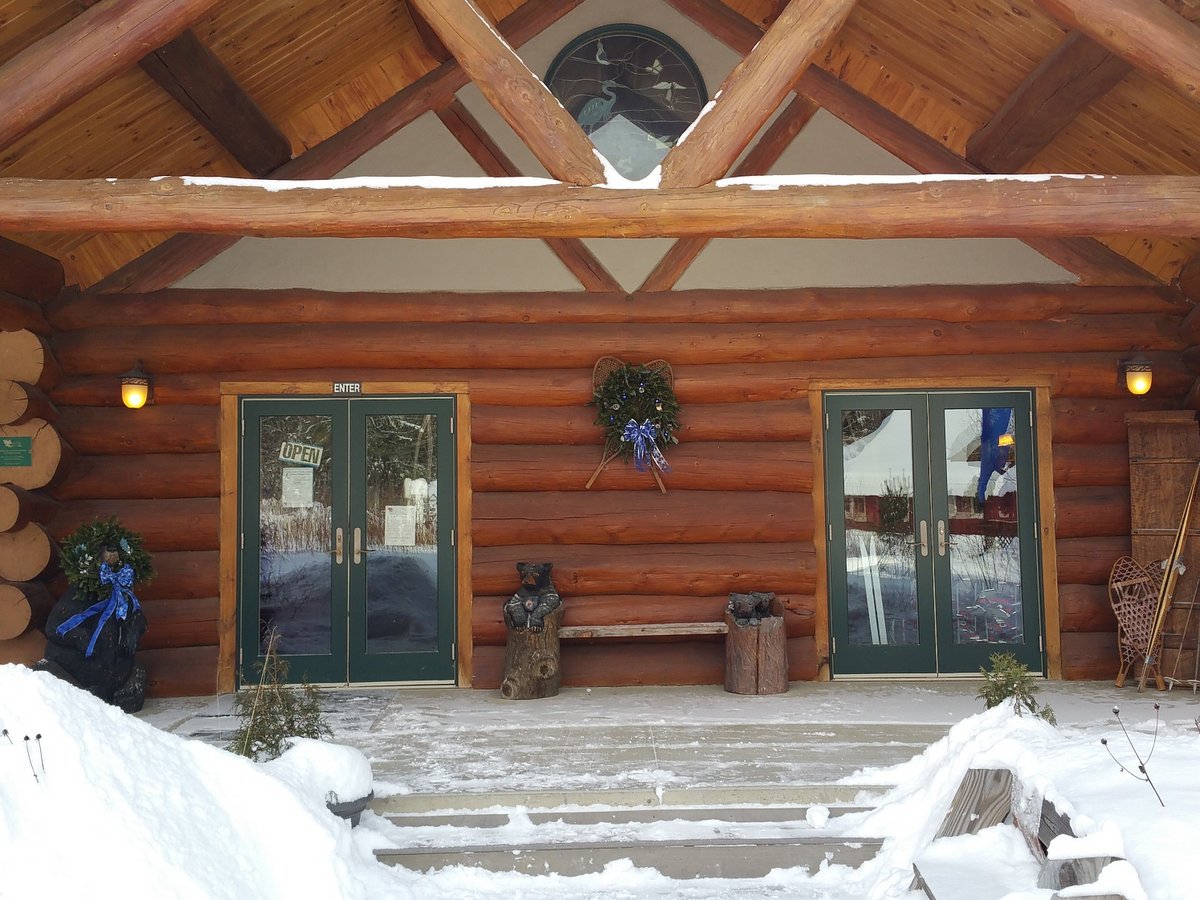
Snow piled up in front of the entrance to a nature center
Photo: Lime Hollow Nature Center

Lime Hollow Nature Center

Other places to explore…

Finger Lakes National Forest

See the map!

Top Cross Country Ski Spots in the Finger Lakes

See the list!

Thrush

Photo: Lang Elliott

Animals and Plants of the Finger Lakes

The Thrush in My Woods

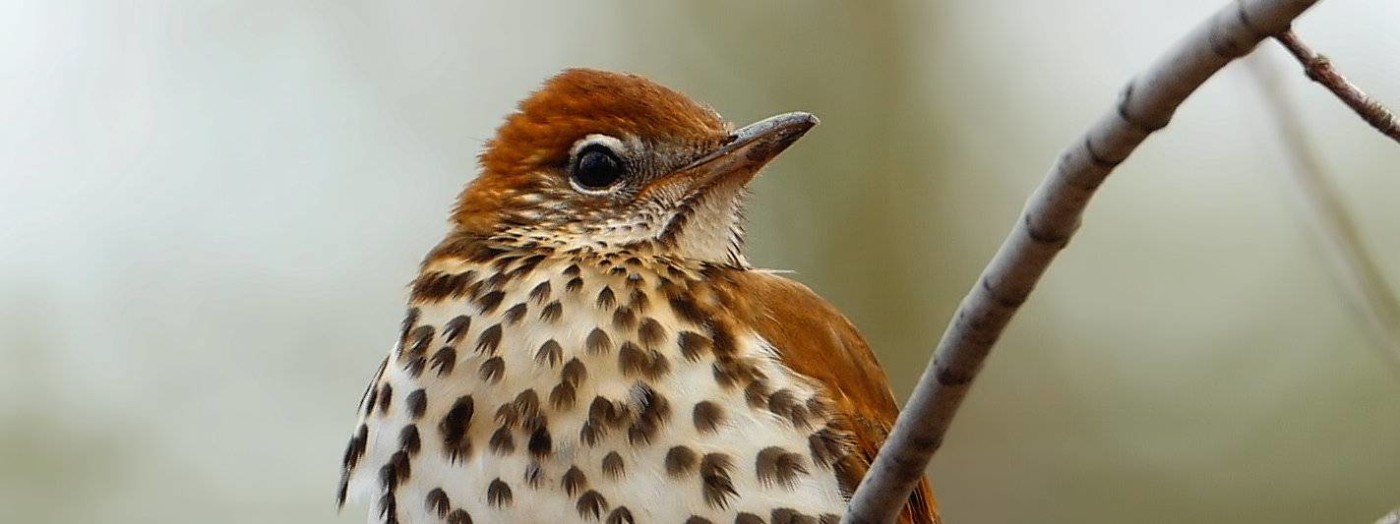
It’s hard not to love a Wood Thrush — ­­Thoreau called it “a Shakespeare among birds.”  We know the Wood Thrush mostly by its strong, clear woodland song.

Frequently described as “flute-like,” the song of the Wood Thrush sounds more like bursts of sweet electronic music to my ears, especially in the buzzing trill at the end of each phrase.  The haunting spring and summer music of these birds resonates through the trees from early morning until they seem to take a midday break.  Later, in the evening, the Wood Thrush often sings until nightfall.

In my neck of the woods, on forested slopes above Owasco Lake, several breeding pairs around my house have stirred me for years.  They return each May from winter grounds in Central America to nest and raise their young under the protection of the rich forest canopy and understory shrubs found throughout the Finger Lakes.

Photo: Lang Elliott
Photo: Lang Elliott

Although they are reputedly not secretive, I rarely glimpse the cinnamon-colored birds as they go about their daily routine, foraging for food in the moist leaf litter or building their nests of grass and fine strips of grapevine.  Typically, Wood Thrushes in this area raise two broods each season, and gathering food is a full time job.

‘My’ Wood Thrushes, as I can’t help thinking of them, seem vigorous and prolific, yet I am aware of an accelerating decline in the overall population since the mid-1960s.

Radical deforestation of wintering grounds in Central America has taken a toll on their numbers.  Also, forest fragmentation caused by human development has disrupted the Wood Thrushes’ traditional breeding ground here in North America.  New roads, houses and commercial development have opened up previously undisturbed forest habitat to forest fringe predators such as raccoons, crows, jays, cowbirds, and house cats.  Many songbird nest sites are at a greater risk as a result.

A 2002 Cornell study of Wood Thrush population decline, by Ralph Hames and others, pointed to an unexpected additional threat to the breeding success of these birds: acid rain.

Photo: Lang Elliott
Photo: Lang Elliott

According to the study, Wood Thrush numbers in the eastern U.S. have declined by more than 40 percent since 1980.  The steepest declines have occurred in areas with the heaviest acid rainfall, especially in elevated forests of the Appalachians, as well as in the Adirondacks.

Acid rain and snow deplete the soil of calcium, putting a great strain on all organisms depending on calcium to survive and reproduce.  Low on this food chain are snails and slugs, the preferred diet for breeding Wood Thrushes.

A steady supply of calcium-rich snails and slugs helps the female thrush produce strong egg shells.  But where soil acidity is greatest, snail and slug populations do poorly, leading in turn to weakened egg shells and smaller clutches of eggs for the Wood Thrush.  As the snail goes, so goes the thrush.  Could the breeding success of other favorite song birds be in question as well?

Thoreau once wrote that, with its song, “The thrush alone declares the immortal wealth and vigor that is in the forest.”  This is what I hear in my little piece of forest, too, but I catch a wistful note now and again.

This story by Eben McLane first appeared in our newsletter, The Land Steward, as part of the Closer Look series about plants and animals of the Finger Lakes region.
Want to know more about animals and plants of the Finger Lakes?

Take a closer look!

Black Bear

Photo: Simon Pierre Barrette/CC-BY-SA-3.0

Animals and Plants of the Finger Lakes

Black Bear Hibernation: Bearing the Cold of Winter

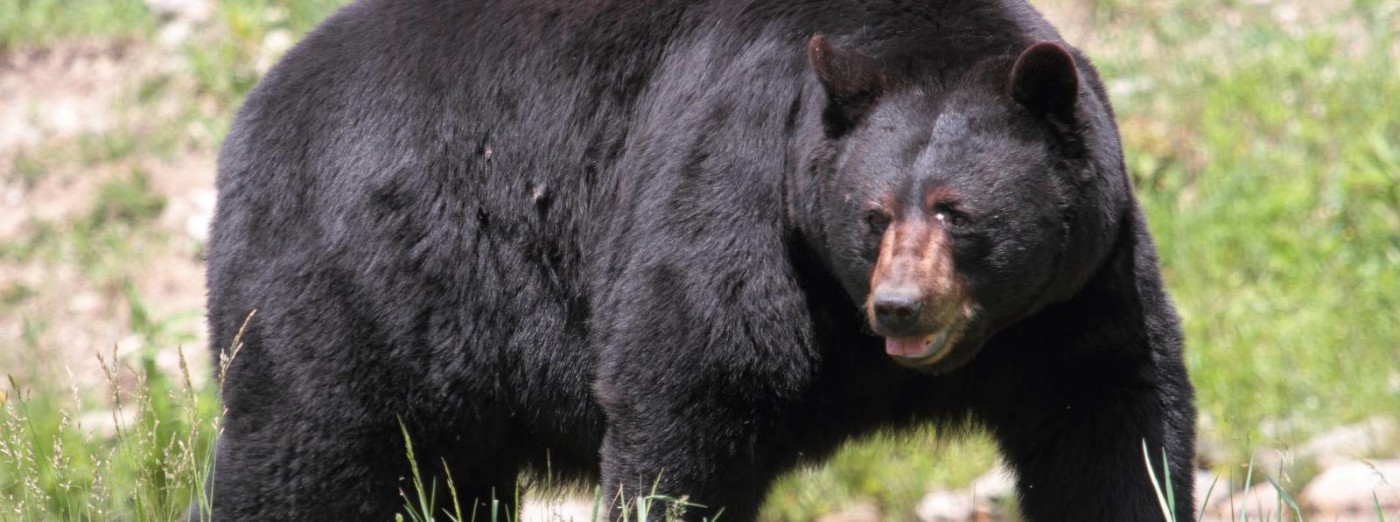
All through spring and summer, black bears (Ursus americanus) have been eating everything they can find, up to 20,000 calories a day in the form of plants and grasses, berries, acorns, insects, honey, and even birdseed and garbage.

When the weather grows cold and the food supply finally dries up, they will retreat to their winter dens. Males bed down around mid-December and emerge in mid-March; females, which give birth during the winter and stay with their cubs for two years, remain in their dens longer, from late November to mid-April.

There is some debate about whether or not bears truly hibernate; some scientists prefer to describe their winter sleep as “lethargy” or “torpor.”  The bodies of so-called “true” or “deep” hibernators such as rodents or bats drop to near-ambient temperatures and their metabolic rates plummet to almost nothing within a few hours.  Some species, such as the chipmunk, periodically wake up to eat and pass waste; others, like the bat, tough it out the whole winter without any sustenance at all.  In comparison, the bear sleeps only lightly.  Its body temperature drops slightly and its metabolism slows, but it will wake if it is disturbed or if the weather turns unusually warm.  This light sleep is likely a survival mechanism, as bear dens can be in surprisingly exposed locations: scratched into hillsides, in rock crevices or hollow trees, under brush piles or downed trees, or even in open areas of the forest floor.  Sleeping bears seem to be able to sense the presence of intruders, and they are able to wake up very quickly in order to defend themselves: midwinter explorers, take care.

Photo: Simon Pierre Barrette.CC-BY-SA-3.0

Unlike many “true” hibernators, the bear does not eat or drink anything for months on end, and it does not urinate or defecate.  If we were to do this, even if we could survive without food, our muscles would atrophy and our bones would become porous and brittle (osteoporotic).  Remarkably, although a bear may lose fifteen to thirty percent of its body mass over the course of a long winter, it may actually have more muscle mass at the end of the winter than it did at the beginning, and its bones will retain all of their strength.  The bear’s body is able to use the nitrogen in urea, a byproduct of fat metabolism, to synthesize proteins that it then uses to maintain muscle and organ mass.  In addition, it recycles its own water all winter, thereby avoiding dehydration and kidney failure.  When a bear metabolizes fat during hibernation, its blood cholesterol levels double, but it does not seem to experience the ill effects that a human would suffer from sky-high blood cholesterol levels (atherosclerosis, gallstones).  Perhaps the only downside to this perfectly self-contained system is the fact that the bear’s intestines continue to produce feces all winter long and it must seek out plants with laxative effects in the spring.

Bears mate during the summer, but the fertilized embryo does not implant in the female’s uterus until after she has denned, and then only if she has sufficient fat stores.  Six to eight weeks later, in midwinter, she gives birth to one to three cubs.  No other northern animal gives birth at such a hostile time of year, and few mammalian species have young that are so tiny in comparison with the adults – from whence the old belief that bear cubs are born dead and must be licked into shape and life by their mothers.  The mother dozes off and on for the rest of the winter as her cubs feed, grow fat, and wait for spring.

This story by Jacqueline Stuhmiller first appeared in our newsletter, The Land Steward, as part of the Closer Look series about plants and animals of the Finger Lakes region.

Want to know more about animals and plants of the Finger Lakes?

Take a closer look!

Fisher

Photo: Bill Banaszewski

Animals and Plants of the Finger Lakes

The Ever So Adaptable Fisher

When former Land Trust President Tom Reimers found evidence of bears on his property in the town of Danby, he set up a motion-sensing camera to confirm his suspicions.

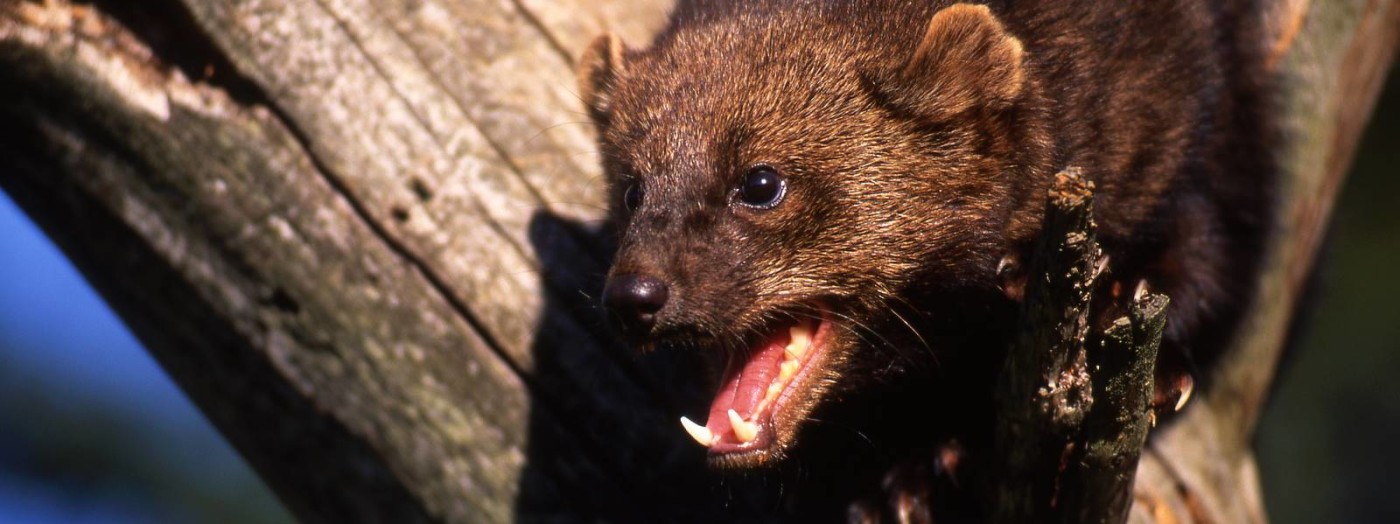
The camera hasn’t succeeded in photographing any bears yet, but last summer it captured a picture of a fisher (Martes pennanti).  The photo shows a large, dark animal, something like a cross between an otter and a large cat, strolling nonchalantly across the forest floor.

Fishers, sometimes called “fisher cats,” may look vaguely feline, but in fact they are mustelids – long, sinuous, fierce members of the weasel family.  Thanks to its varied habitat, upstate New York is unusually rich in mustelid species: otters swim in the waterways; mink hunt at the water’s edge; weasels live in the uplands and hedgerows; martens are adapted to deep snow at higher elevations; fishers inhabit old-growth coniferous forests.

Photo: Bill Banaszewski

That, at any rate, was the received wisdom about fishers, but it turns out to be only partially correct.  Like so many other North American animals, fishers almost went extinct in the nineteenth century as the forests were clearcut and the animals themselves were indiscriminately trapped for their dense, glossy fur. When it was all over, the only fishers left in the state were in the Adirondacks.  Adirondack fishers were live-trapped and released into the Catskills in the late 1970s, where they flourished.  Because the animals were only found in undisturbed wilderness, biologists wrongly assumed that they could only survive in old-growth forests.

This misconception persisted until fisher sightings began trickling in from all over the state, from Albany to western New York.  DEC wildlife biologist Lance Clark saw his first fisher in the mid-90s in Bear Swamp State Forest in Cayuga County; a roadkilled animal turned up in Onondaga County at about the same time.  Beginning in 2007, naturalist Linda Spielman has found fisher tracks in Tioga and Tompkins Counties.

Fishers, it turns out, are a lot more adaptable than anyone had expected.  As largely arboreal predators, they will not live in treeless areas, but they do not seem to be bothered by most human activities and have made themselves at home in many areas throughout the northeast.  In fact, so-called “edge habitats”– areas at the junctions between distinctly different habitats, especially forest and field – are particularly attractive to fishers because they are home to high populations of the small mammals that are their primary prey.  Fishers aren’t picky, however: they will eat amphibians and reptiles, birds, eggs, insects, carrion, and even berries and acorns.

They are also one of the few animals that dare to prey on porcupines.  A fisher will repeatedly attack the porcupine’s face until it weakens and can be flipped over for a kill.  In some cases, they can force porcupines to fall out of a tree and then attack their stunned prey on the ground.

As marginal farmland reverted to woodland in recent decades, most of upstate New York turned into potential fisher territory.  Fishers were reintroduced into Pennsylvania in 1994 and, combined with populations from West Virginia, are now dispersing into western New York.  Animals from both the Adirondacks and the Catskills are colonizing central New York, including the Finger Lakes forests.

In fact, fishers are in the process of reclaiming many parts of their former range.  When they were eradicated in Vermont, porcupine populations skyrocketed; the forests didn’t get a break from those voracious bark-eaters until Maine fishers were imported to control them.  Vermont fishers then moved into New Hampshire and Massachusetts, and have recently even been spotted just outside of Boston.

There have been many sightings of “black panthers” in upstate New York.  Panthers, or cougars, were long ago extirpated from the state and, in any case, are never black.  If you see a “black panther,” it is most likely a fisher.  At approximately three feet long, the animal may look formidable, but even a very large specimen rarely weighs more than fifteen pounds.  Unlike cougars, these animals are no danger to human beings, but forest-dwelling owners of free-ranging cats and poultry would be wise to take appropriate precautions.

Angie Berchielli, a trapper and naturalist who assisted in the efforts to restore fishers to the Catskills and Pennsylvania, is excited by the growing fisher population.  “It is truly one of the greatest success stories [showing] what very good management of a species by the DEC can do.  They are now available for all of us, whether we are trappers, photographers, or people who just like to watch wildlife.”

The NYS DEC is collecting information about fishers.  Please report any sightings to fwwildlf@gw.dec.state.ny.us.

This story by Jacqueline Stuhmiller first appeared in our newsletter, The Land Steward, as part of the Closer Look series about plants and animals of the Finger Lakes region.

Want to know more about animals and plants of the Finger Lakes?

Take a closer look!

Wood Frog

Photo: Lang Elliott

Animals and Plants of the Finger Lakes

Lazarus of the Amphibian World

Winter is a hard time, particularly for those animals that cannot regulate their body temperatures.

It is perhaps hardest for amphibians, whose moist skins make them susceptible to freezing.  Many aquatic frogs, such as the bullfrog and leopard frog, lie dormant all winter below the ice, breathing through their skins.  Terrestrial animals are exposed to far more extreme temperatures.  Those that can’t avoid freezing temperatures have two ways of making it through the winter: freeze resistance and freeze tolerance.

Photo: Lang Elliott
Photo: Lang Elliott

Freeze-resistant animals rely on a phenomenon known as supercooling.  Despite what we’ve all learned, water doesn’t necessarily freeze at 0 °C.  A small volume of very pure and still water can stay liquid to −42 °C; however, the moment this supercooled water contacts an ice crystal, it will freeze solid almost instantly.  Smaller animals, including some insects and reptiles, use supercooling to weather brief and relatively mild freezing episodes.  Most amphibians cannot use this technique, however, because their skins are highly permeable to water and ice.

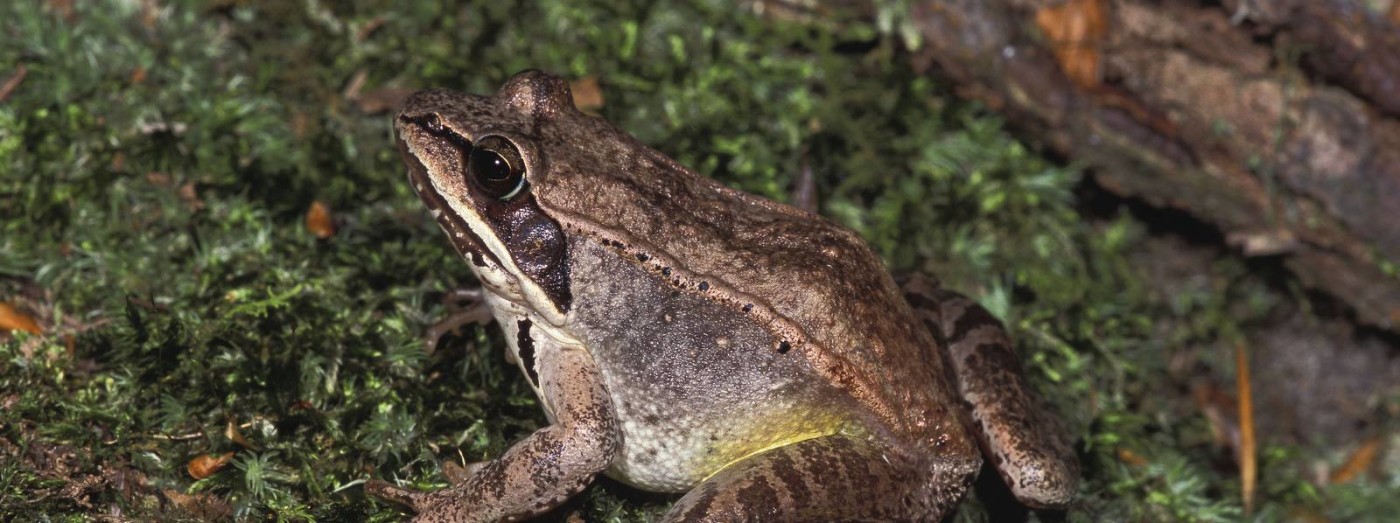
The wood frog (Rana sylvatica) is one of a handful of North American frogs that is freeze-tolerant.  If you search very carefully under the leaf-fall on the upland forest floor, you’re likely to find one of these little black-masked fellows sitting motionlessly, perfectly camouflaged, limbs neatly tucked into its body in order to reduce water loss.  It will remain there all winter, freezing and thawing along with the soil itself, until spring finally frees it from its state of suspended animation.

Frostbite occurs when ice crystals form within tissues and slice like knives through delicate cell structures, causing irreparable damage.  In order for the wood frog to survive winter, it must ensure that the water in its cells does not turn to ice.  When the frog first begins to freeze, it saturates its body with glucose. Water that contains dissolved solutes (such as salts or sugars) freezes at a lower temperature than does pure water, which is why icebergs float in the ocean.  In the same way, glucose acts as a cryoprotectant, a sort of “antifreeze” that lowers the freezing point of the frog.  This little animal is remarkably tough, but it is not invincible: it cannot survive if more than about 65 percent of the water in its body freezes.

Photo: Lang Elliot
Photo: Lang Elliot

As the frog cools further, ice forms in the blood and lymph vessels and the gut, where it can do no damage.  The more water that is locked up in ice, the greater the concentration of solutes in the blood and lymph, and the more water that is drawn out from the cells.  (Something similar happens when you rub a piece of meat with salt in order to draw out the juices.)  The cells shrink but do not collapse because they contain glucose, which reduces water outflow.  The tiny amount of water in each dehydrated cell then supercools so that the cell contents remain liquid even when the temperature drops considerably below freezing.

Wood frogs also accumulate the chemical urea in their tissues when they are subjected to dry conditions, such as those of late fall and early winter.  Urea minimizes the amount of water that is lost through the skin.  It seems to be an even more effective cryoprotectant than glucose and also has a depressant effect on the frog’s metabolism.  Both glucose and urea seem to stabilize cell structures and protect them from being damaged by freezing, although no one yet knows how this works.

When the temperature warms, the frog begins to defrost in the opposite direction that it froze: that is, from the inside out.  It is in the center of the frog that blood last circulated and the glucose concentration is highest, and therefore where the melting point is lowest.  The heart, which had been encased in ice, begins beating again; the shrunken vital organs and muscles rehydrate and resume functioning after a few hours.  If it is spring, and not just a brief thaw (and the frogs seem to know which is which), they will mate just a few days later.  Their resurrection is perfectly timed: the warmer weather brings rain to fill the vernal pools in which they will lay their eggs.

This story by Jacqueline Stuhmiller first appeared in our newsletter, The Land Steward, as part of the Closer Look series about plants and animals of the Finger Lakes region.

Want to know more about animals and plants of the Finger Lakes?

Take a closer look!

Jack-in-the-Pulpit

Photo: Lang Elliott

Animals and Plants of the Finger Lakes

Jack-in-the-Pulpit

As spring finally arrives in the Finger Lakes, the first Jacks-in-the-Pulpit (Arisaema triphyllum) begin to emerge from the forest floor.  The foliage of this plant is minimalistic, consisting of only one or two trifoliate leaves that might easily be confused with sprigs of poison ivy.

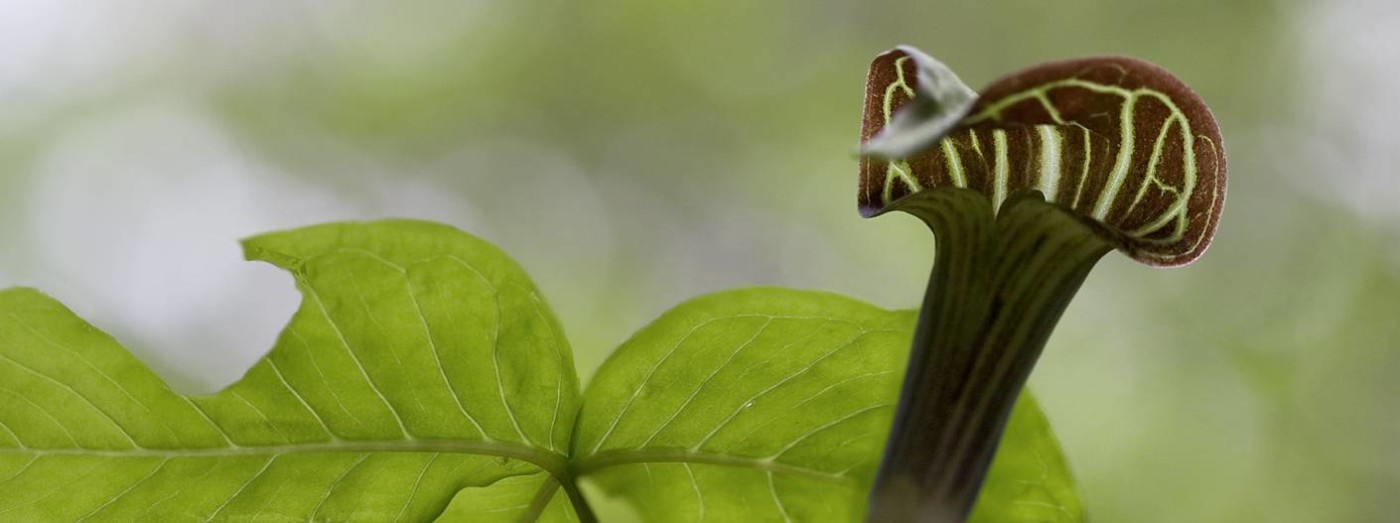
It is the floral structure that is truly rich and strange: a fleshy, cylindrical spike, known as a spadix, is surrounded by the graceful curl of a single large bract known as a spathe, which is often decorated with natty white, brown, or purple pinstripes.  The flowers are invisible, hidden deep in the base of the inflorescence.

Photo: Lang Elliot
Photo: Lang Elliott

As its name suggests, the plant bears a remarkable and improbable resemblance to a tiny man standing in a tiny old-fashioned canopied pulpit, looking something like a cross between a skunk cabbage (to which it is closely related) and a pitcher plant (to which it isn’t).  Nevertheless, its lifecycle recalls Greek mythology more than it does Church history: it’s a dead ringer for Tiresias, the blind, long-lived prophet of Thebes, who spent time as both a woman and a man.

The Jack-in-the-Pulpit grows very, very slowly in the damp gloom of the forest floor.  For the first few years of its life, it produces a single leaf that captures whatever dim light manages to filter through the leaves of the trees, squirreling away every extra bit of energy in its underground corm.  The plant would be vulnerable to herbivores if every part of it were not saturated with large crystals of highly poisonous calcium oxalate.  Most animals wisely leave it alone, though black bears dig up and eat the corms with relish, apparently taking advantage of their laxative effects.

After two or three good years, a plant may put out an inflorescence containing only male flowers: the plant’s existence is still marginal, and it takes much less energy to make pollen than to make fruit.  If conditions remain favorable for several more years and the corm has grown large enough, it may cautiously begin to produce both male and female flowers in its “pulpit”; eventually, if all goes well, it may be so bold as to put out two leaves and mostly, or only, female flowers.  Whenever conditions deteriorate, it will revert back to producing male flowers and only a single leaf.  It switches sex in this way, year after year, for several decades and reportedly up to a hundred years.

Although some of its physiological adaptations are remarkably sophisticated, its pollination strategy is fairly crude.  It cannot self-fertilize because the male flowers die before the female flowers are mature, so it needs the help of insect pollinators.  The spathe emits a mushroom-like scent in order to attract tiny gnats that lay their eggs on fungus.  Once the insects crawl inside, they become disoriented: the hood of the spathe blocks light shining from above, the bottom of the pulpit is often pale and translucent, and the dark and light stripes make it impossible for them to tell which way is up.  Floral structures with male flowers have small escape hatches at the bottoms of their spathes, but those with female flowers are dead ends.  Gnats foolish enough to fall into a female plant after falling into a male one may accidentally pollinate a few flowers before they die inside.  In late summer, the spathe withers to reveal a cluster of bright red fruits that are just as poisonous as the rest of the plant.

By turns both beautiful and deadly, male and female, the Jack-in-the-Pulpit is a jack-of-all-trades.  It has been used as both a food and a poison, a medicine and a contraceptive.  Native Americans used the berries to make a red dye, and European settlers used starch from the corm to stiffen their clothes.  Like Tiresias himself, the plant is believed to have the power of prophesy: a seed swirled in a cup of water will reveal whether a sick person will live or die.  Perhaps Jack-in-the-Pulpit is the Tiresias of our damp forest floor.

This story by Jacqueline Stuhmiller first appeared in our newsletter, The Land Steward, as part of the Closer Look series about plants and animals of the Finger Lakes region.

Want to know more about animals and plants of the Finger Lakes?

Take a closer look!

Red-Bellied Snake

Photo: Dick Bartlett

Animals and Plants of the Finger Lakes

The Red-Bellied Snake

All winter, the red-bellied snake (Storeria occipitomaculata) has hunkered down in various hidey-holes – anthills, abandoned burrows, rock crevices – in the company of other small snakes.

Come spring, it will shake off the torpor of hibernation and strike out on its own.

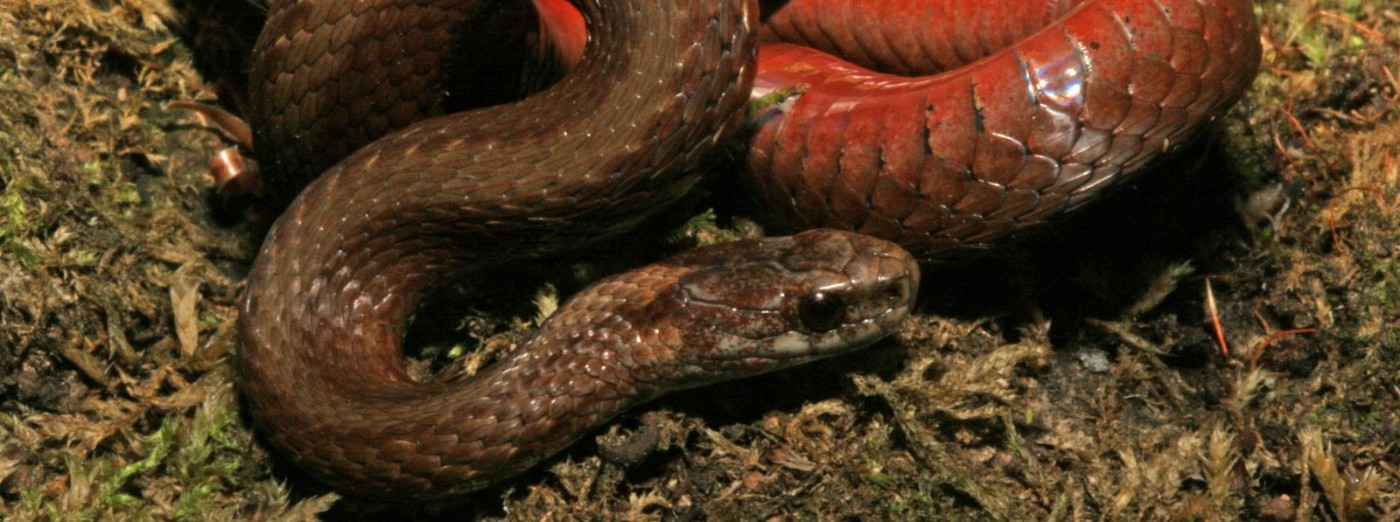
It will be looking for a moist, shady location, which may be a forest, a wet meadow, or, very often, your flowerbed or garden.  If you have a touch of ophidiophobia, don’t worry: at only seven to ten inches long and with a head no thicker than the rest of its body, this tiny reptile might well be mistaken for a healthy-sized night crawler.

Photo: Dick Bartlett

The red-bellied snake often hangs around gardens because they are full of soft, delectable invertebrates like slugs, snails, and earthworms.  Its long, slender, recurved teeth are shaped like escargot forks, perfect for getting a purchase on slimy creatures.  It is a particularly determined hunter of snails.  In order to extract a juicy morsel from its unpalatable casing, the snake gets a grip on the soft parts, digs in, and pulls until the snail tires and can be removed from its shell.

Although a formidable foe of slugs, this little creature is a milquetoast.  It’s an easy mark for crows, raptors, raccoons, cats, other snakes, and people who do not recognize it for the helpful garden warden that it is.  Its best defense is to avoid detection altogether, so it spends most of its time hiding in dark, moist places under rocks, boards, and other debris.  If it must emerge, its nondescript brown or gray back provides perfect camouflage against the earth.

When it cannot avoid conflict, it will try to bluff its way out of danger.  It may first try flattening its head and body in a vain attempt to appear larger.  If the attacker is persistent, it will thrash around, releasing a slimy mixture of feces and foul-smelling musk from its anal glands and flashing its red or orange belly. Bright colors often signal noxiousness in the animal world, and you would do well not to chew on a monarch butterfly or a red eft, but the red-bellied snake is nonvenomous.  In fact, since it is regularly eaten by everything from shrews to chickens to bass, it appears to be quite tasty.  If you pick it up, it may startle you by curling its upper jaw bones outwards and turning its lip scales back in a tiny snarl, rubbing the side of its mouth against your hand.  It’s not known what this behavior is intended to achieve, as its teeth are far too tiny to do damage to any but the smallest adversaries.  It will not bite, as if it already knows that biting anything harder than a slug would be futile.  If nothing else works, it may go into theatrical convulsions and play dead.  This otherwise convincing performance is somewhat marred by the fact that it insists that a dead snake must remain upside down; if placed on its belly, it will roll on its back again.

Like 20 percent of snake species, the red-bellied snake is viviparous, giving birth to live young in late summer or early autumn.  Viviparity is a common trait in the reptile world because it confers distinct advantages, especially in uncertain environments.  While inside the mother, the young are protected from predators, disease, dehydration, and temperature fluctuations.  The female can regulate her own body temperature by basking in the sun when it is cold and seeking shelter when it is hot, so the young can be kept at the optimal temperature for development; this is gives snakes a critical edge in northern climates and high elevations where the soil tends to be cool and winter comes early.  As is always true, however, what is good for the babies is bad for the mother.  The female is seriously weighed down by her litter; the neonates are typically a third or even half the length of the mother, and the average litter size is eight. Once the litter is born, mother and babies go their separate ways.  They will only encounter others of their kind when they den up for next winter.

This story by Jacqueline Stuhmiller first appeared in our newsletter, The Land Steward, as part of the Closer Look series about plants and animals of the Finger Lakes region.

Want to know more about animals and plants of the Finger Lakes?

Take a closer look!

Turkey

Photo: Marie Read

Animals and Plants of the Finger Lakes

The Wild Turkey

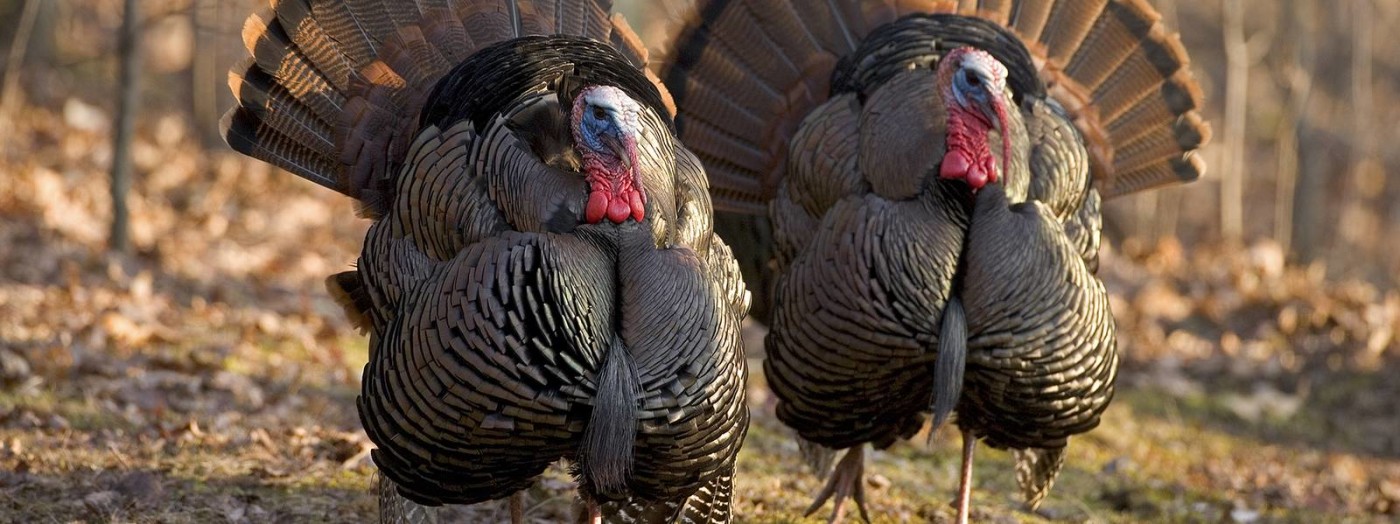
Thanksgiving Dinner or Courageous American Icon? The Wild Turkey (Meleagris gallopavo) is surely the most American of birds. Both a totem animal and a major source of protein for many native North Americans, it gave the Europeans a foothold in the New World and has become synonymous with Thanksgiving.

No less a luminary than Benjamin Franklin praised its courage – much greater, he thought, than that of the Bald Eagle.  The natural history of the turkey is intimately intertwined with human history.  The subspecies found in the eastern United States (M. g. silvestris) was hunted by native tribes, who used fire to create the patchwork of mature forest, young forest, and meadows that turkeys prefer.  Another subspecies, now assumed extinct, was domesticated in pre-Columbian Mesoamerica; a third was domesticated in the Southwest.

Photo: Marie Read
Photo: Marie Read

When this newfangled bird was brought back to England, it was called a “turkie,” perhaps in reference to its supposed “Eastern” origins. (In many European languages – including, ironically, Turkish – the word for “turkey” is related to the word for “India.”)  About a century after this domesticated fowl was brought to Spain by the conquistadors, it was brought back to America by the Pilgrims.

The Wild Turkey has certain biological quirks that allow it to live closely with humans but which sometimes bring it into conflict with people.  It does not defend a home territory against others of its own kind; rather, it lives in relatively large flocks organized by a strict pecking order.  Furthermore, it seems to readily accept people into this order, assigning each human a “gender” and a place in the hierarchy.  A turkey may therefore behave submissively, aggressively, or even seductively toward people, depending on how they are perceived.

Turkey aggression can be rather frightening: a male, known as a “tom” or “gobbler,” can be up to 25 pounds and four feet long and, as Ben Franklin noted, seems to have no fear.  Gobblers acclimated to people may behave quite differently than those in the wild.  Although birds in the rural Finger Lakes seem to be a pretty docile bunch, it is prudent to minimize human-turkey conflicts by never giving the birds access to food (including spilled birdseed) and making sure that you and your neighbors always assert your dominance.

Turkeys have contributed greatly to human welfare, though the reverse has not always been true.  The five subspecies of Wild Turkey originally ranged over most of what is now the continental United States, but their populations were devastated by overhunting and the wholesale conversion of forest into farmland; they disappeared from New York by the 1840s.  However, the tide began to turn in the early 20th century, when many farms in the Northeast were abandoned and reverted to forest.

Around 1948, a population crossed into western New York.  In 1959, some of those birds were trapped and released in other parts of the state.  Today, there are estimated to be ten times as many Wild Turkeys in New York as there once were in the entire country.

Paradoxically, the same changes that brought the Wild Turkey back are also contributing to a recent decline in its numbers.  Turkeys spend most of the year in hardwood forests, where they feed on acorns, seeds, fruits, roots, grasses, and invertebrates.  However, since the turkey nest is little more than a hole scratched in the ground and the poults have no defenses against predators, hens prefer to lay their eggs and raise their young in areas with dense ground cover; adults often use the same areas to hide from predators, including hunters.  As the forests of the Northeast mature, they contain ever fewer hiding places.  The recent cold, rainy springs have also been hard on turkeys.  Poults sometimes succumb to the weather; additionally, when they are wet, they emit an odor that makes it easier for predators to find them.

The turkey gets an undeservedly bad rap.  In common parlance, “turkey” means “a fool” or “a failure.” It’s true that the barnyard turkey is rather awkward and self-important, but its indigenous cousin is a very different bird.  It is well-known to hunters as a worthy adversary, swift, elusive, and crafty.  It is also surprisingly beautiful, with iridescent feathers and a head covered with fantastic crenellations of bright-colored flesh.  We should give thanks for Ben Franklin’s “true original Native of America,” without which we would not be where we are today.

This story by Jacqueline Stuhmiller first appeared in our newsletter, The Land Steward, as part of the Closer Look series about plants and animals of the Finger Lakes region.

Want to know more about animals and plants of the Finger Lakes?

Take a closer look!